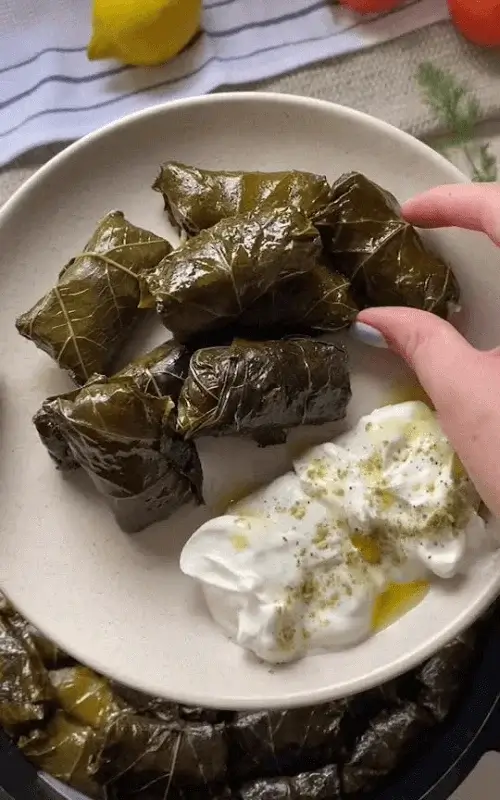
Stuffed Grape Leaves Recipe
Watch the Full Step-by-Step
- Medium saucepan with lid
- Wide heavy pot with lid
- Chef's knife
INGREDIENTS
- 16 ounces/450 grams jarred grape leaves, drained and rinsed
- 2 medium potatoes, peeled
- 1½ cups short- or medium-grain rice
- ⅓ bunch cilantro, finely chopped
- ⅓ bunch parsley, finely chopped
- ⅓ bunch dill, finely chopped
- 2 medium tomatoes, peeled and finely chopped
- 1 medium onion, finely chopped
- 1 lemon, juiced
- ½ cup olive oil
- 1 tablespoon fine salt
- ¼ teaspoon freshly ground black pepper
- 2 cups boiling water
- 1 lemon, juiced
- ¼ cup olive oil
- 1½ cups boiling water
- 1 cup labneh, for serving

INSTRUCTIONS
- Combine the rice, herbs, tomatoes, onion, lemon juice, olive oil, salt, pepper, and boiling water in a medium saucepan. Cover and cook over medium heat until the liquid is absorbed and the rice is partially cooked, 10 to 12 minutes. Remove from heat and let cool slightly.
- Slice the potatoes into thin rounds and arrange them in an even layer across the bottom of a wide pot. If the grape leaves have a strong brined aroma, soak them in lukewarm water for 10 minutes, then drain well.
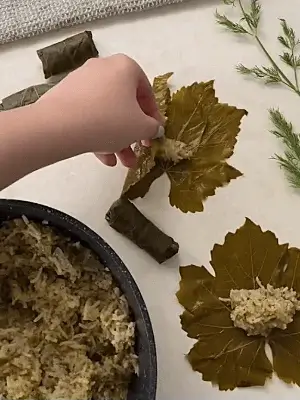
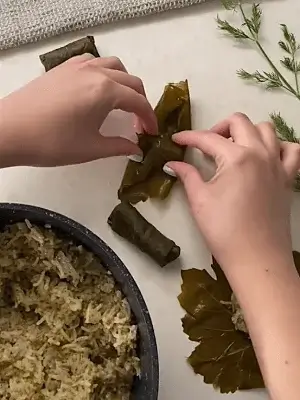
- Place a grape leaf shiny-side down. Spoon about 1 tablespoon of rice filling near the base, fold in the sides, and roll tightly. Repeat with the remaining leaves and filling.
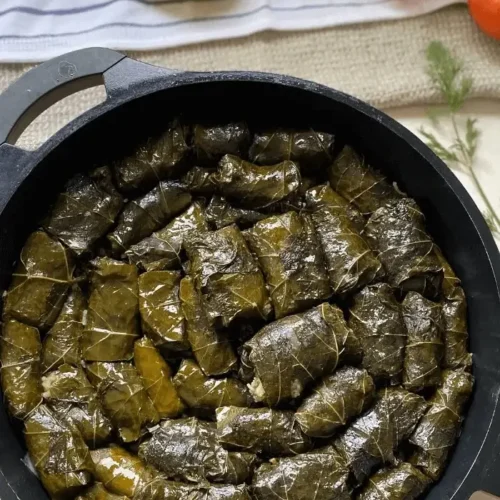
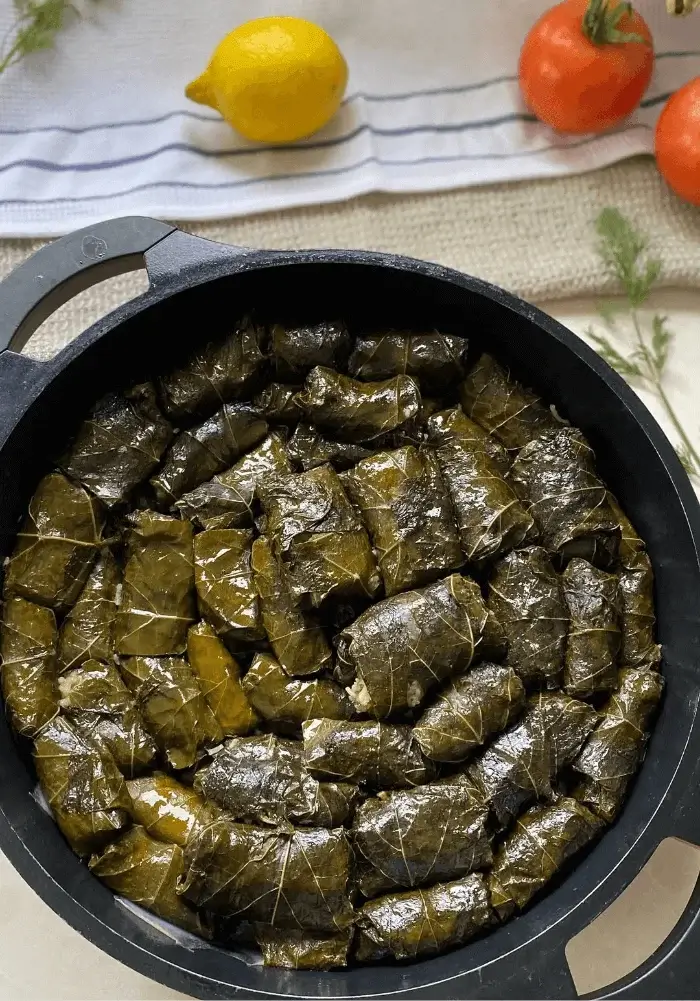
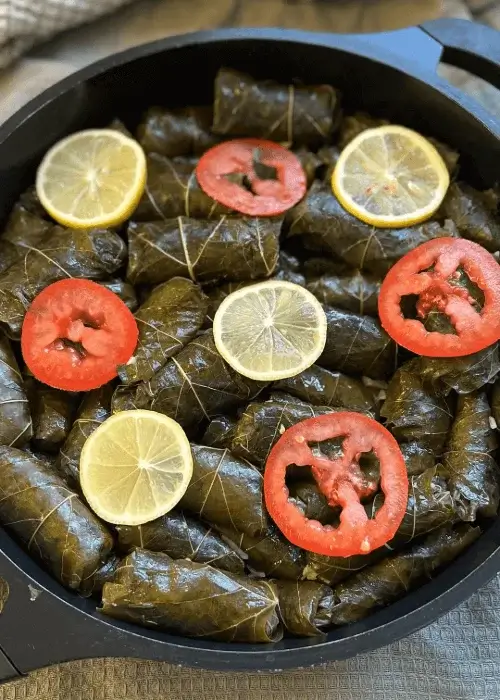
- Arrange the stuffed grape leaves snugly, seam-side down, over the potatoes in tight layers.
- Pour the lemon juice, olive oil, and boiling water evenly over the grape leaves. Cover and simmer over medium heat until tender, 50 to 60 minutes. Let rest for 10 minutes before serving.
- Serve warm or at room temperature with labneh.
FAQ
What type of rice works best in a stuffed grape leaves recipe?
For a stuffed grape leaves recipe, short- or medium-grain rice is ideal because it holds its shape while cooking and absorbs flavors from herbs, tomato, lemon juice, and olive oil. Long-grain rice, such as basmati, can become too fluffy and separate, making the filling difficult to roll tightly in the grape leaves. Rinsing the rice briefly before cooking removes excess starch, preventing it from becoming gummy. Partially cooking the rice before filling ensures the leaves do not overcook while the rice finishes absorbing liquid.
Can I make the stuffed grape leaves ahead of time?
Stuffed grape leaves can be prepared ahead of time and actually benefits from resting, as the flavors meld over several hours or overnight. After rolling the grape leaves, cover them tightly and refrigerate. Before serving, gently reheat by steaming or simmering with water, olive oil, and lemon juice until warmed through. This method ensures the rice filling stays moist and the leaves do not dry out. You can also freeze unbaked stuffed grape leaves for up to three months, thawing in the refrigerator before cooking.
Can I make this stuffed grape leaves recipe in a slow cooker?
Yes, this recipe can be adapted for slow cooker cooking. Arrange the potato slices at the bottom of the slow cooker, then layer the stuffed grape leaves snugly on top. Pour the lemon juice, olive oil, and water over the rolls. Cook on low for 4 to 6 hours, or until the rice is fully cooked and the leaves are tender. Using a slow cooker allows gentle, even heat, preventing the leaves from tearing or overcooking.
How do I prevent the grape leaves from being too sour?
Stuffed grape leaves can become overly sour if too much lemon juice is added or if the grape leaves themselves are very brined. To control acidity, rinse canned or jarred grape leaves thoroughly under cool water before rolling. Use fresh lemon juice carefully, adding just enough to balance the flavors without overwhelming the filling.
If the rice filling seems acidic, a small pinch of sugar can balance the brightness. Cooking the stuffed grape leaves over medium heat with potatoes or other neutral vegetables also helps absorb excess tang, resulting in a tender, flavorful dish that is perfectly balanced and not sharply sour.
What herbs can I substitute in this stuffed grape leaves recipe?
Herbs are a central component of a stuffed grape leaves recipe, providing freshness and aroma. While traditional recipes use parsley, dill, and cilantro, you can adjust according to availability or taste. For example, mint adds a bright, refreshing note, while basil or tarragon offers a slightly sweeter, aromatic profile. When substituting, use roughly the same quantity as the original herbs, chopping them finely to integrate well with the rice filling.
Why do my grape leaves sometimes turn mushy?
Grape leaves can turn mushy if cooked at too high a heat, for too long, or if the rice filling is overcooked before rolling. To prevent this, partially cook the rice and keep it slightly underdone before stuffing. Arrange the rolls snugly in a wide pot, cover with water or broth, and simmer over medium or low heat rather than boiling vigorously. Using firmer leaves and layering potatoes or vegetables at the bottom helps stabilize the rolls. Allowing the cooked grape leaves to rest for 10 minutes before serving also helps them set.
Can I use frozen leaves for this stuffed grape leaves recipe?
Yes, but they require careful preparation. First, thaw the leaves completely in the refrigerator or in cold water. Once thawed, rinse them well to remove any excess salt or brine. Blanching in boiling water for 1–2 minutes can also help soften the leaves and make them more pliable for rolling. Frozen leaves may be slightly more fragile than fresh or jarred varieties, so handle them gently. Once prepared, proceed with filling and rolling as usual.
What about fresh grape leaves?
They require extra preparation. Young, tender leaves are best; mature leaves can be tough and bitter. Blanch the leaves in boiling water for 1–2 minutes, then transfer to an ice bath to stop the cooking and retain color. Remove the stems and pat dry before rolling.
Fresh leaves have a lighter flavor and less salt than jarred or canned leaves, so you may want to add a little extra salt to the filling. Using fresh leaves produces a brighter, more delicate dish that retains authentic Mediterranean texture and flavor.
How do I store leftovers?
Leftovers should be stored in an airtight container in the refrigerator, where they will remain safe and flavorful for 3 to 5 days. Place the leaves seam-side down to maintain their shape and cover with a little of the cooking liquid to prevent them from drying out.
For longer storage, a stuffed grape leaves recipe can be frozen: arrange the leaves in a single layer in a freezer-safe container or bag, separating layers with parchment paper, and freeze for up to three months. Thaw in the refrigerator overnight and reheat gently with lemon juice or water to preserve texture and taste.
Why do my grape leaves fall apart while rolling?
It usually means the leaves are too dry, old, or not properly softened. Jarred leaves should be rinsed and soaked for 10 minutes in lukewarm water to increase pliability. Fresh leaves should be blanched briefly in boiling water before use. Make sure the rice filling is not overfilled, as this creates pressure that can tear the leaves. Rolling with the shiny side down and folding in the sides tightly before rolling from the base helps maintain structure.