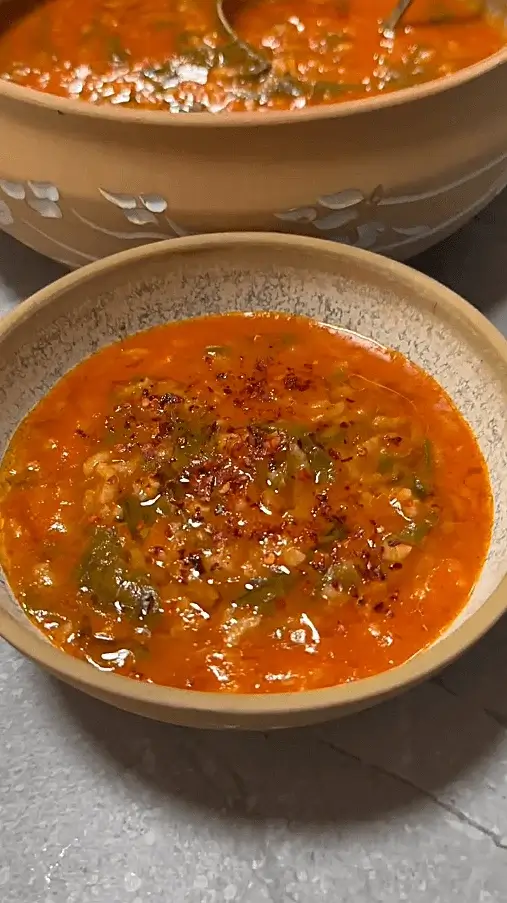
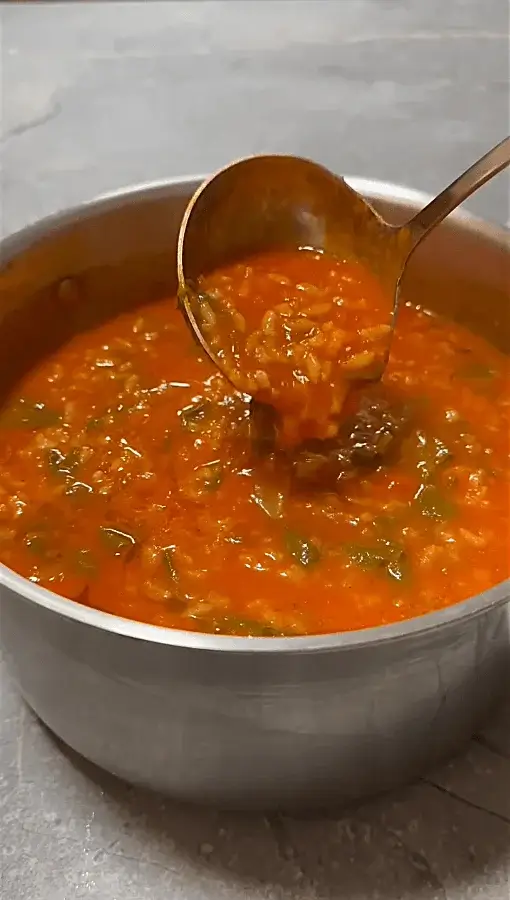
Easy Tomato Rice Soup
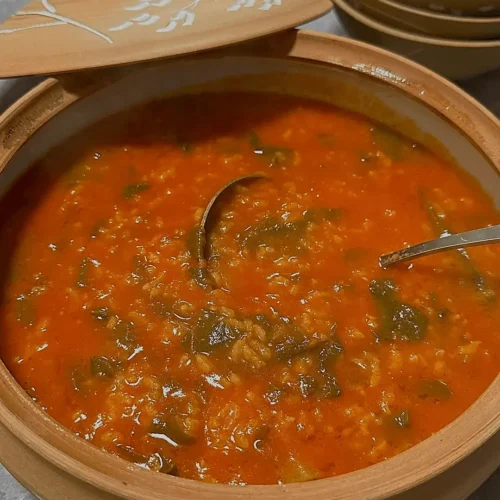
Watch the Full Step-by-Step
- Immersion blender
INGREDIENTS
- 1 cup/200 grams long-grain rice
- 8 medium beefsteak tomatoes, diced
- 1 medium onion, sliced
- 6 garlic cloves
- 1 red bell pepper, diced
- 3 Swiss chard stalks with leaves, finely chopped
- 4 tablespoons olive oil
- 1 tablespoon sweet paprika
- 1 tablespoon salt, or more to taste
- 1 teaspoon ground black pepper
- 1 teaspoon sugar
- 1 tablespoon tomato paste
- 1 cup tomato purée

INSTRUCTIONS
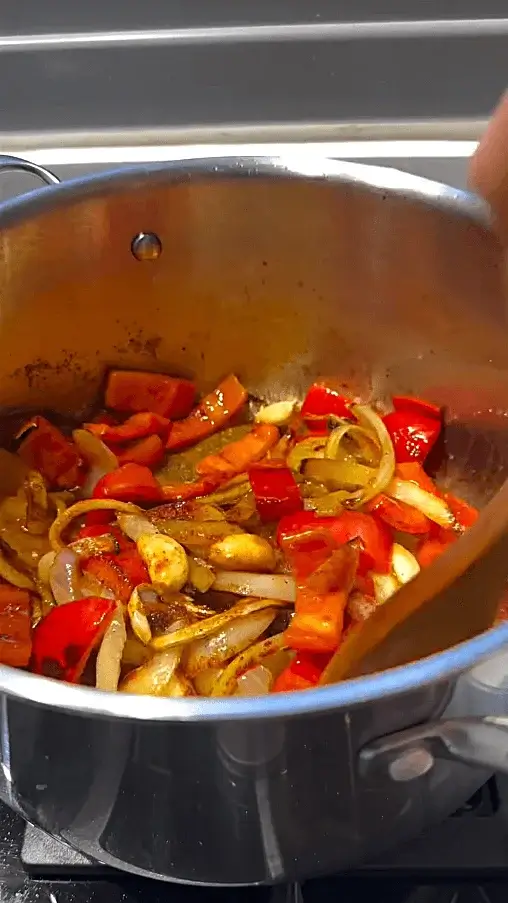
- Heat the olive oil in a large heavy pot over medium heat. Add the onion, garlic, and bell pepper, and cook until softened and lightly browned, 8 to 10 minutes.
- Stir in the paprika, salt, pepper, sugar, tomato paste, and tomato purée, and cook for 1 minute to develop the flavors. Add the diced tomatoes and cook for 5 minutes, stirring occasionally.
- Pour in enough water to fill the pot three-quarters full. Bring to a boil, reduce to a simmer, cover, and cook for 20 minutes.
- Blend the soup with an immersion blender until smooth. Add the rice and Swiss chard, return to a gentle simmer, and cook until the rice is tender, about 30 minutes.
- Taste and adjust seasoning. Ladle into bowls and finish with a drizzle of olive oil and a pinch of dried chili. Serve hot.
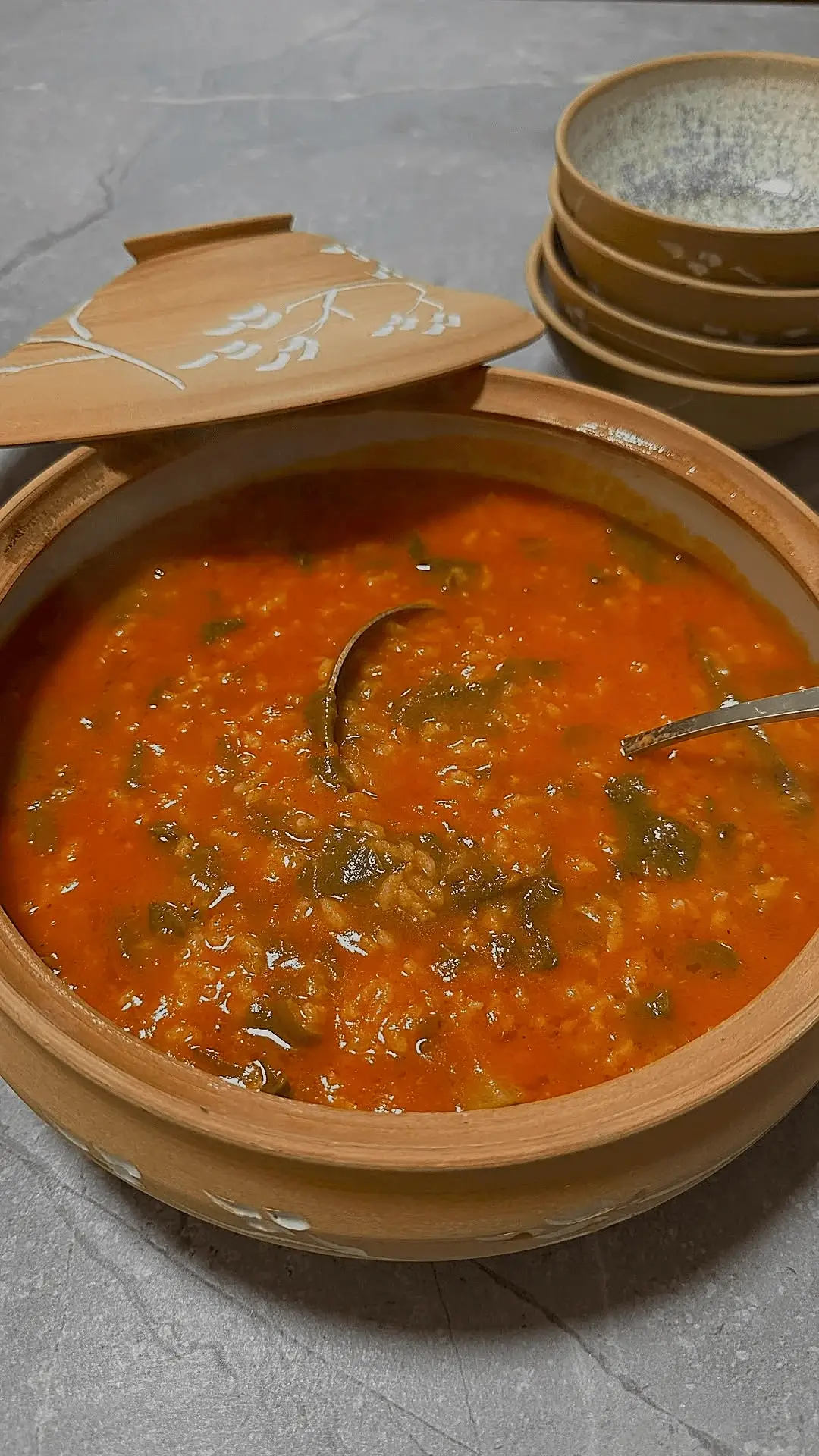
FAQ
What type of rice works best for tomato rice soup?
Long-grain white rice is the most reliable option because it cooks evenly, maintains structure during simmering, and absorbs flavor without becoming mushy. Long-grain varieties release less starch than short-grain types, which prevents the soup from turning overly thick or pasty. Medium-grain rice can work if you prefer a slightly creamier consistency, but it may shorten the overall cooking time.
Brown rice is possible, but it requires significantly more time to soften, which can cause the greens and tomato base to overcook. Parboiled rice stays firm the longest, making it a good alternative for meal prep or reheating. Whichever rice you choose, rinse it thoroughly to remove excess surface starch so the tomato rice soup stays smooth and balanced rather than cloudy or gummy.
Can the soup be made ahead of time without losing texture?
The soup can be made ahead, but the texture depends on when the rice is added. Rice continues to absorb liquid as it sits, which means the soup will thicken considerably if stored fully assembled overnight. To maintain the intended consistency, prepare the tomato base in advance and refrigerate it separately for up to three days. Cook the rice only when you are ready to serve, then simmer it directly in the reheated base.
This approach preserves the silky blended tomato texture while preventing the rice from becoming swollen or mushy. If you need to store the fully combined soup, keep extra broth or tomato purée on hand to loosen it before reheating. Gently warm the soup over low heat to avoid scorching the tomato base, and add fresh greens at the end for brighter flavor. This ensures the tomato rice soup retains its intended body and freshness even after being prepared in advance.
How to adjust the flavor if your tomatoes are not very sweet or ripe
When tomatoes are underripe or lacking sweetness, the flavor of tomato rice soup can become too acidic or flat. The simplest adjustment is to add a small amount of sugar, which balances acidity without making the soup taste sweet. Increasing the amount of tomato paste also deepens the savory backbone and restores richness lost from weak tomatoes. A long simmer helps break down the fibers in underripe tomatoes, mellowing their sharpness and enhancing their natural umami.
If the acidity is still too strong, a splash of carrot purée or a few cooked carrots blended into the base can add subtle sweetness without altering the soup’s identity. Salt level is equally important; underseasoning makes acidity more noticeable, so taste incrementally while cooking.
Can I freeze this tomato rice soup?
The soup can be frozen, but it is important to manage the rice carefully to preserve texture. Rice tends to absorb liquid and can become mushy or overcooked after freezing and reheating. The best approach is to prepare the tomato base completely, blend it smooth, and freeze it separately from the rice. Freeze in airtight containers for up to three months.
When ready to eat, thaw the base overnight in the refrigerator, then add freshly cooked rice or cook the rice directly in the thawed soup. This method ensures the tomato rice soup retains its silky texture and the rice stays tender but not overly soft. Additionally, freezing the base without rice allows for portion control and versatility, as you can adjust seasoning and thickness upon reheating.
Do I need an immersion blender?
While an immersion blender is convenient for this tomato rice soup, it is not strictly necessary. A regular countertop blender can be used to achieve a smooth, velvety texture, but it requires caution due to the heat of the soup. Allow the soup to cool slightly before blending in batches, filling the blender only halfway to avoid overflow. Holding a kitchen towel over the lid or venting slightly prevents hot splatters.
Can I make tomato rice soup spicier or add more depth of flavor?
To add heat, incorporate a pinch of dried chili flakes, cayenne pepper, or a chopped fresh chili during the initial sauté stage. For deeper flavor, consider a small amount of smoked paprika, roasted red peppers, or a splash of balsamic vinegar, which enhances the natural sweetness of the tomatoes. Herbs such as thyme, oregano, or bay leaf can be added while simmering, then removed before blending to keep the soup smooth. Adjusting salt and sugar gradually is crucial, as these elements bring harmony to the acidity and spice.
What proteins can be added to the tomato rice soup?
This soup is very versatile and can accommodate a wide range of proteins, from poultry and seafood to sausages, to create a more substantial meal. Chicken breasts or thighs are ideal because they cook quickly and absorb the rich tomato and spice flavors; dice or shred the chicken and add it after blending the soup base but before the rice is fully cooked.
Shrimp and firm white fish, such as cod or tilapia, should be added near the end of cooking to prevent overcooking, as seafood cooks in just a few minutes. Sausage or chorizo can also be included; brown it first to render the fat, then slice or crumble it into the soup to infuse smoky, savory flavor.