Classic Sfinge Donuts

Watch the Full Step-by-Step
- Thermometer
- Kitchen scale
INGREDIENTS
- 8 cups/1 kilogram all-purpose flour
- 2 tablespoons/14 grams dry yeast or 3 ¾ tablespoons/50 grams fresh yeast
- 1/2 cup/100 grams sugar
- 3 ⅓ cups/800 grams water
- 1 tablespoon salt
- 1 tablespoon arak
- 6 cups/1.5 liters oil, for deep frying
- 2 cups sugar, for coating

INSTRUCTIONS
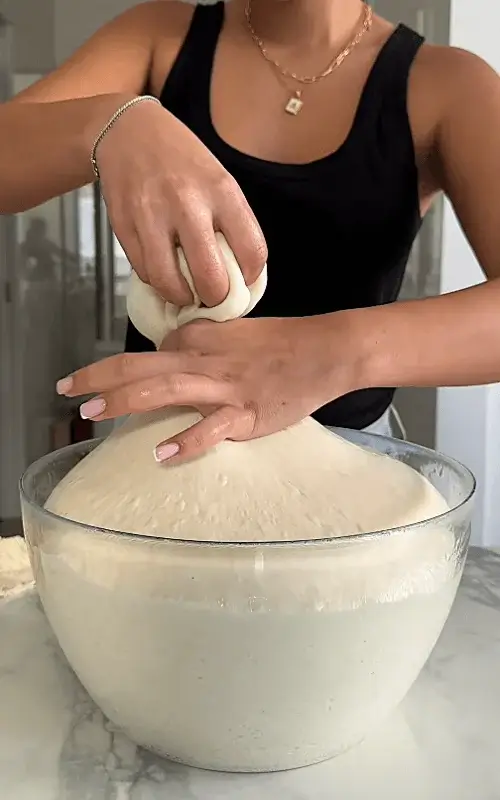
- Make the dough by combining water, yeast, sugar, flour, salt, and arak in a mixing bowl with a dough hook. Knead on medium-high speed for 8 minutes until a sticky, slightly soft dough forms. Transfer to a greased bowl, cover, and let rise until doubled in size, about 1 hour.
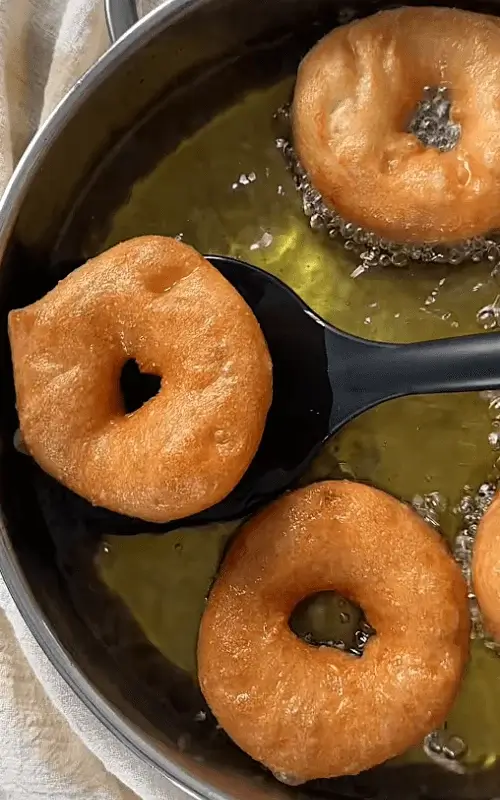
- Heat the oil in a wide, shallow pot over medium heat (or 340°F/170°C if using a thermometer).
- With slightly wet hands, pinch off pieces of dough, shape lightly, and poke a hole in the center. Carefully fry in the hot oil for 2 minutes per side until golden.
- Remove to a plate lined with paper towels. Immediately toss each sfinge donut in sugar to coat evenly.
FAQ
What makes sfinge donuts different from regular donuts?
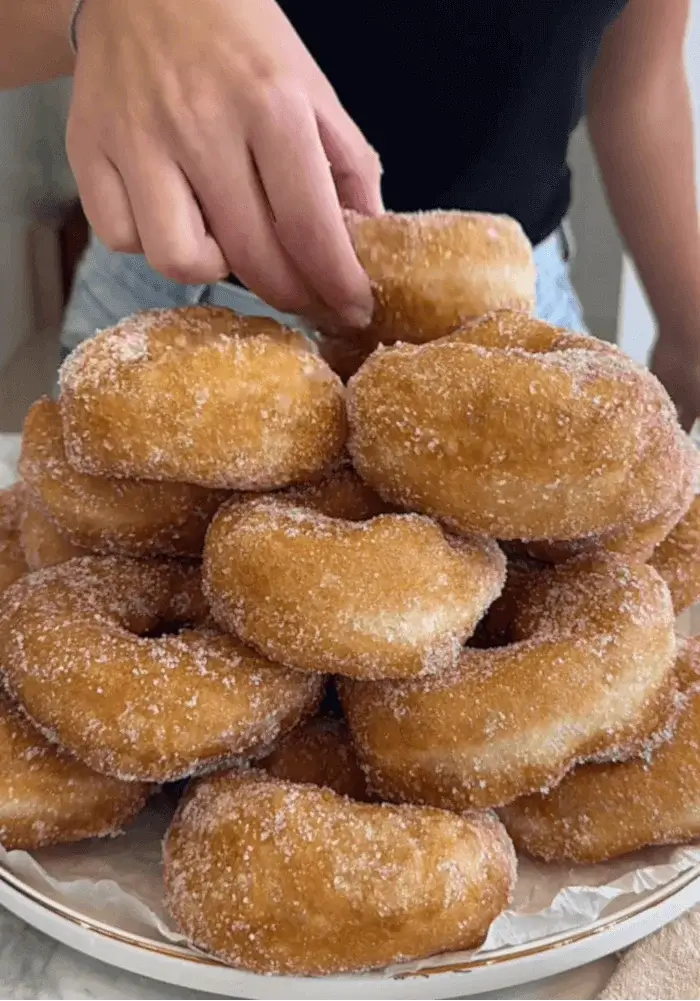
Sfinge donuts are distinct from regular donuts due to their light, airy texture and traditional Moroccan preparation. Unlike typical American-style donuts, which often use baking powder or cake dough, sfinge donuts rely on yeast fermentation to create a fluffy interior and slightly chewy bite. The dough is often enriched with a hint of arak or other aromatic spirits, giving sfinge donuts a subtle flavor depth that sets them apart from standard sweet fried pastries.
They are typically deep-fried in hot oil and immediately coated in sugar, which ensures a crisp exterior while preserving their soft, pillowy center. The shaping process, including creating a hole in the center, also contributes to their unique appearance and even cooking.
Can the donuts be made without arak?
Yes, but the texture and frying behavior will change slightly. Arak in sfinge dough isn’t only for flavor; the alcohol plays a functional role. Alcohol weakens gluten development because it replaces part of the water content, which keeps the dough from becoming tough or chewy. It also evaporates faster than water when the dough hits hot oil, which helps create a lighter crust and reduces oil absorption.
If you leave it out, the donuts may come out a bit denser and may soak up more oil. You can substitute another neutral spirit like vodka or white rum, which will give you the same structural benefits without adding an anise flavor. If you prefer to avoid alcohol entirely, you can omit it, but expect a slightly heavier texture and a less crisp finish compared to sfinge made with arak.
How do I know when the oil is the right temperature?
The correct oil temperature for frying is around 340°F/170°C. Maintaining this temperature is critical to ensure the donuts cook evenly without absorbing too much oil. If the oil is too cool, sfinge donuts will become greasy and heavy, while oil that is too hot will brown the exterior too quickly and leave the interior undercooked. You can check the temperature using a kitchen thermometer or by dropping a small piece of dough into the oil; it should sizzle and rise slowly to the surface.
Can the donuts be made ahead of time?
Sfinge donuts are best enjoyed fresh, but they can be made ahead of time and stored with some care. After frying and coating them in sugar, allow them to cool completely. Place them in an airtight container at room temperature for up to 24 hours. If you want to store them longer, sfinge donuts can be frozen uncoated in sugar for up to one month; reheat them in a hot oven and toss in sugar before serving. Freezing slightly affects the texture, but the donuts will retain their airy, soft interior and crisp exterior when handled properly. Avoid refrigerating, as this can make them dense and chewy.
How do I get the perfect hole in the center?
Creating a perfect hole in the center of sfinge donuts requires slightly wet hands and gentle shaping. Pinch off pieces of dough and lightly form a ball, then use your fingers to poke a hole in the middle. The hole allows the donut to cook evenly in hot oil, ensuring the interior is fully cooked while the exterior crisps. If the hole is too small, it may close during frying; if too large, the donut may become fragile.
What type of flour is best for making sfinge donuts?
All-purpose flour is the most commonly recommended because it provides a balance of protein that supports gluten development without making the dough too tough. Using bread flour, which has higher protein content, can make the donuts chewier, while cake flour may produce overly soft or fragile donuts that collapse during frying.
All-purpose flour helps sfinge donuts achieve their signature airy interior with a slightly chewy bite, which is essential for the traditional texture. Properly measuring the flour by weight (as in grams) ensures consistency. Sifting the flour beforehand can also help remove lumps and incorporate air, resulting in light, fluffy sfinge donuts that rise evenly during fermentation and fry beautifully.
Can I add flavorings to the sfinge donut dough?
Traditional additions include a tablespoon of orange blossom water, a teaspoon of vanilla extract, or even finely grated citrus zest, which complement the subtle sweetness of the dough without overpowering it. Liquids added should be accounted for in the total water measurement to avoid a dough that is too sticky or too dry. Adding spices like cardamom or cinnamon in small amounts can also enhance flavor, producing aromatic sfinge donuts that are still soft and airy.
Why are my donuts dense or heavy?
Dense or heavy sfinge donuts usually result from improper yeast activation, over- or under-kneading, or incorrect rising times. If the yeast is old or not properly activated, the dough will not develop enough gas for a light, airy texture. Over-kneading can tighten the gluten too much, while under-kneading leaves the dough uneven and prone to collapsing.
Additionally, letting the dough rise in a very cold or very hot environment can prevent it from doubling properly, leading to heavy sfinge donuts. Using precise measurements for flour and liquids, maintaining proper water temperature for yeast activation, and allowing the dough to ferment fully for about 1 hour ensures sfinge donuts achieve the classic light, fluffy texture.