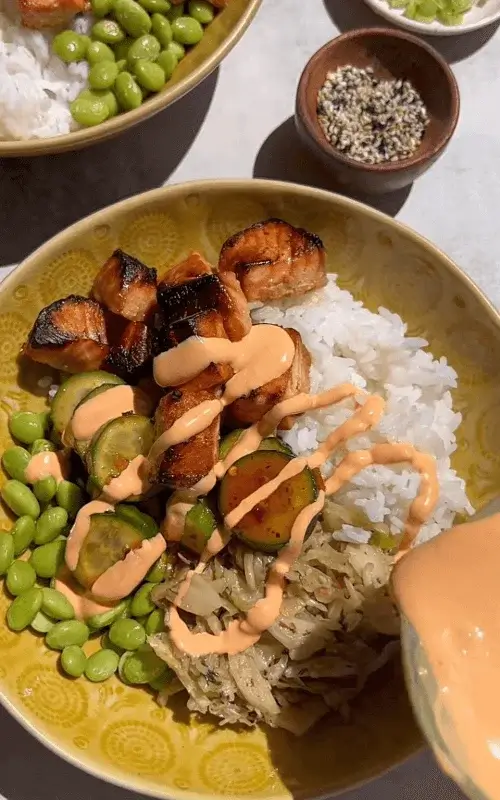
Spicy Salmon Bowl with Rice and Cucumber Salad
Watch the Full Step-by-Step
- Chef's knife
- Mixing bowls
- Medium saucepan with lid
INGREDIENTS
- 1.3 pounds/600 grams salmon, cut into 1-inch/2.5-cm cubes
- 3 tablespoons light soy sauce or coconut aminos
- 1 tablespoon honey
- 2 garlic cloves, crushed
- 1 tablespoon rice vinegar
- 1 teaspoon sriracha
Rice:
- 1 cup/185 grams sushi rice or short-grain rice
- 1½ cups water
- 1½ tablespoons rice vinegar
- 1 tablespoon sugar
- 1 teaspoon salt
Salad:
- 4 Persian cucumbers
- 1 tablespoon rice vinegar
- 1 tablespoon chili crunch
- 1 tablespoon soy sauce
- 2 teaspoons sesame oil
- 1 teaspoon grated ginger
- Drizzle of honey
Spicy Mayo:
- ½ cup mayonnaise
- ⅓ cup sriracha
- 1 teaspoon sesame oil
For Serving:
- Sesame cabbage salad/pickled cabbage
- Shelled edamame
- Sesame seeds
- Chopped scallions

INSTRUCTIONS
- Heat the oven to 400 degrees. If available, select the roast setting.
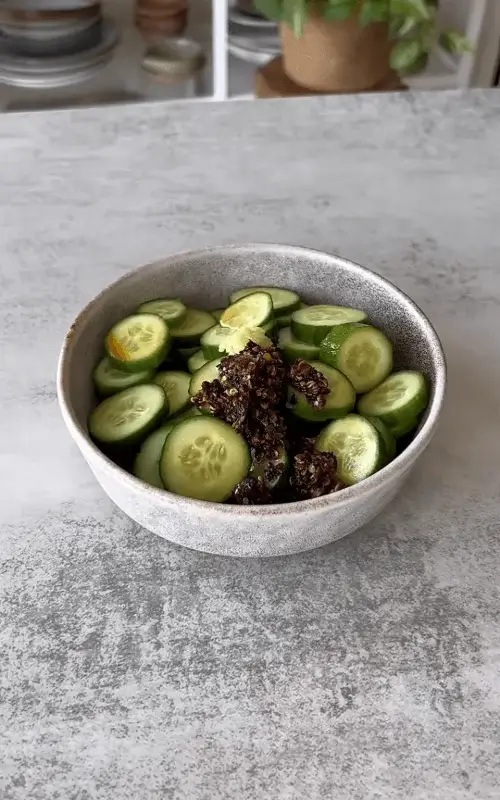
- Slice the cucumbers into thin rounds and toss with the rice vinegar, chili crunch, soy sauce, sesame oil, ginger, and honey. Let sit while preparing the rice and salmon.
- Rinse the rice until the water runs mostly clear. Add to a pot with the water, bring to a boil, then reduce to a simmer. Cook until the water is absorbed, 15 to 20 minutes. Remove from heat, season with rice vinegar, sugar, and salt, and stir gently.
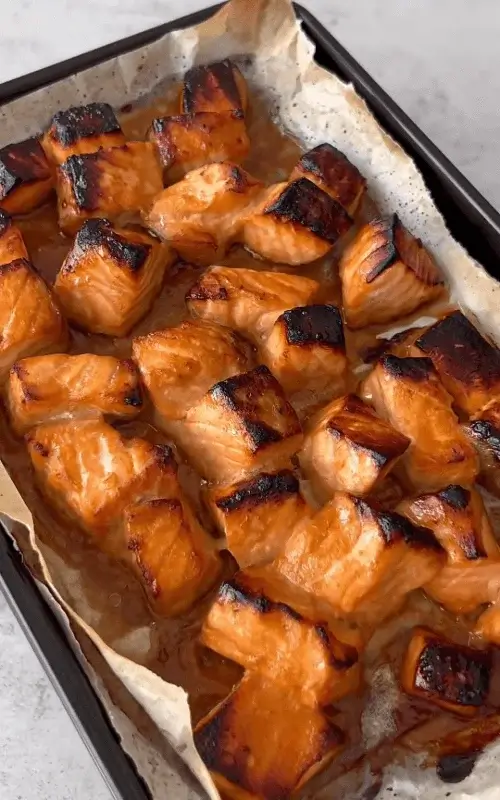
- Combine the salmon with the soy sauce, honey, garlic, rice vinegar, and sriracha. Spread on a sheet pan and roast for 8 minutes. Broil for 2 to 3 minutes, until the tops are browned.
- Whisk the mayonnaise, sriracha, and sesame oil until smooth.
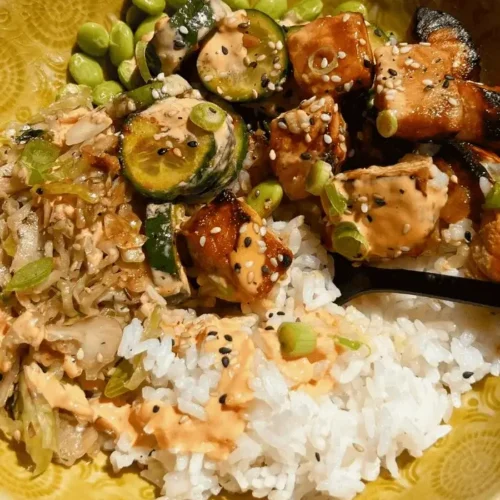
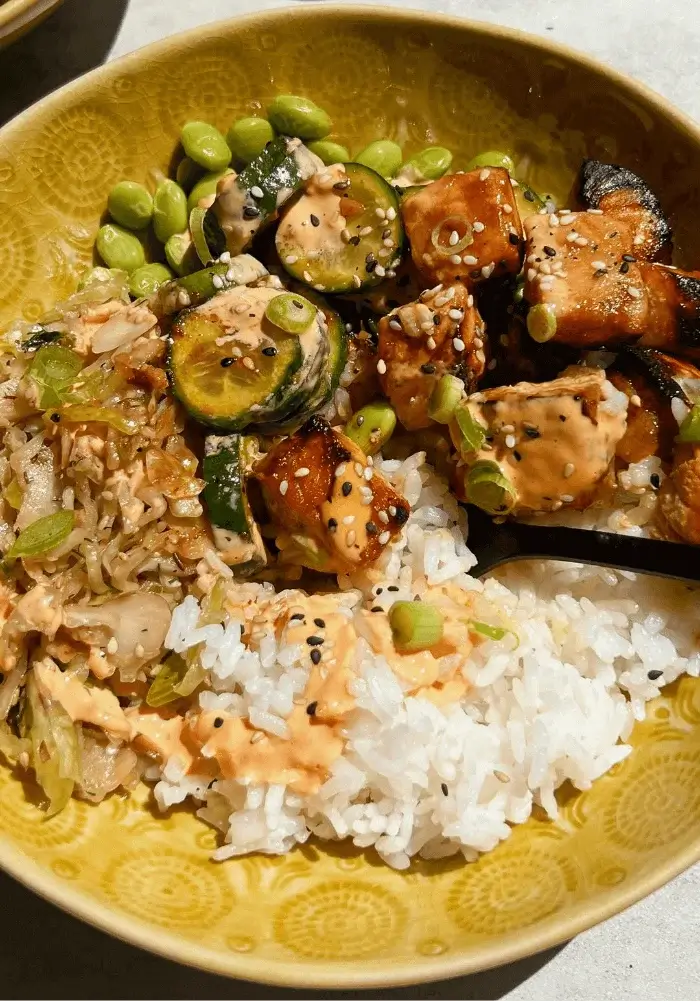
- Assemble bowls with rice, salmon, cucumber salad, cabbage, edamame, spicy mayo, sesame seeds, and scallions.
FAQ
What type of salmon is best for making this spicy salmon bowl?
Fresh, firm, and fatty salmon is ideal because it holds up well when cubed and roasted. Atlantic salmon or king salmon provides a rich flavor and smooth texture, which contrasts nicely with the rice and spicy mayo. Wild-caught salmon tends to have a more pronounced flavor, while farmed salmon offers a milder taste and consistent fat content. For best results, look for skin-on fillets if you like added crispiness under the broiler, or skinless if you prefer easier serving.
Freshness is crucial, as the salmon is the centerpiece of the spicy salmon bowl and minimal cooking time preserves its delicate texture. Avoid pre-seasoned or frozen fillets with added water, as these can make the fish soggy and dilute the flavor. Proper handling, including patting dry before marinating, ensures the cubes stay firm and flavorful throughout roasting.
What is the best way to reheat leftovers?
Handle each component separately for best results. Sushi rice can be gently warmed in a microwave or on the stovetop with a splash of water to prevent drying. Reheat salmon briefly in a 350-degree oven for 5–7 minutes, or use a quick broil for 1–2 minutes, just until heated through, to avoid overcooking. The cucumber salad is best served cold and should not be reheated, as this preserves its crunch and bright flavor. Reassemble the bowl just before serving and add fresh toppings like sesame seeds or scallions to restore texture.
How do I balance the sweet, spicy, and savory flavors?
Balancing flavors in a spicy salmon bowl relies on thoughtful layering. The soy sauce in the salmon adds umami, while honey introduces subtle sweetness to counter the heat of sriracha. Rice vinegar brightens the dish and helps marry flavors between the salmon, rice, and cucumber salad. The chili crunch adds texture and spiciness, while the drizzle of honey in the cucumber salad softens the sharpness of vinegar and chili.
The spicy mayo provides a creamy, slightly tangy finish that smooths out the heat and brings cohesion. Tasting each component individually before assembly allows adjustments, ensuring the finished spicy salmon bowl is harmonious, with no one flavor overpowering the others. Attention to seasoning and freshness ensures a complex but balanced bowl every time.
How can I make the sushi rice fluffy and slightly sticky?
To achieve fluffy yet slightly sticky sushi rice for a spicy salmon bowl, rinse the rice thoroughly in cold water until the water runs mostly clear. This removes excess starch that can make rice gummy. Cook the rice in a precise water-to-rice ratio—generally 1½ cups water for 1 cup of sushi rice—and bring to a boil before reducing to a simmer. Cover tightly and avoid lifting the lid during cooking, which traps steam and ensures even cooking. Once done, season immediately with rice vinegar, sugar, and salt, gently folding to combine without smashing the grains. Allow the rice to rest for a few minutes, uncovered, to cool slightly, which helps the grains separate while still being sticky enough to hold the salmon cubes.
What is the best way to prepare the cucumber salad?
The cucumber salad should be crisp, slightly tangy, and balanced with heat. Use Persian or English cucumbers for a mild, crunchy texture. Slice them into thin rounds for easy layering over the rice. Combine with rice vinegar for acidity, soy sauce for umami, sesame oil for nuttiness, and chili crunch for heat. Add a small drizzle of honey to balance the spiciness and a pinch of grated ginger for aromatic brightness. Toss gently to coat evenly and allow the salad to sit while preparing the rice and salmon. This resting time slightly softens the cucumbers and allows the flavors to meld without losing crunch. Avoid over-salting, as the soy sauce and chili crunch already provide sufficient seasoning for the spicy salmon bowl.
How do I ensure the salmon cubes cook evenly without drying out?
Cut the fillets into uniform 1-inch/2.5-cm pieces. This ensures that all cubes roast at the same rate. Marinate briefly in soy sauce, honey, garlic, rice vinegar, and sriracha to add flavor and help retain moisture. Spread the cubes in a single layer on a sheet pan so they do not steam each other. Roast at 400 degrees for about 8 minutes, then briefly broil for 2 to 3 minutes to create a lightly browned, caramelized surface. Avoid overcooking, as salmon continues to cook slightly after removal from the oven. Patting the salmon dry before marinating reduces excess liquid, helping the cubes caramelize evenly.
What toppings enhance the flavor and texture of the spicy salmon bowl?
Toppings elevate a spicy salmon bowl by adding crunch, freshness, and contrasting flavors. Shelled edamame provides a tender, nutty bite, while sesame cabbage salad contributes crisp texture and subtle earthiness. Sprinkle toasted sesame seeds for a nutty aroma and delicate crunch. Chopped scallions add a mild onion flavor that brightens each bite. The spicy mayo adds creamy heat, balancing the acidity from the cucumber salad and the umami of the roasted salmon. These toppings create multiple layers of flavor and textural contrast that make every spoonful interesting.
Can I make the spicy salmon bowl ahead of time for meal prep?
Yes, but timing is key for optimal freshness. Cook the sushi rice and store it in an airtight container; allow it to cool to room temperature before refrigerating. Marinate the salmon but cook it fresh before serving to prevent it from drying out. Prepare the cucumber salad in advance and keep it refrigerated; the flavors will meld nicely, enhancing the tang and spice. Assemble the spicy salmon bowl just before eating to maintain the crispness of the cucumbers, the creaminess of the spicy mayo, and the texture of the roasted salmon. Avoid storing the assembled bowl for long periods, as the rice may become sticky and the salad soggy.
Can I use frozen salmon?
Frozen salmon can be used, but proper thawing is essential to preserve texture and flavor. Thaw the salmon in the refrigerator overnight or under cold running water if short on time, avoiding a microwave defrost, which can partially cook the fish. Pat the salmon dry thoroughly before cutting into cubes, as excess moisture will prevent caramelization during roasting. Slightly freezing salmon beforehand can make cutting uniform cubes easier. Frozen salmon may have a slightly different texture than fresh, but when handled carefully and roasted at high heat, it will still create a tender and flavorful spicy salmon bowl.
What alternatives can I use if I don’t have sriracha?
Sambal oelek can be used for pure chili heat without sweetness, adjusting quantity to taste. Gochujang, a Korean chili paste, adds both spiciness and a subtle fermented sweetness, which complements the honey and soy in the marinade. Chili garlic sauce is another good substitute, delivering heat and aromatic garlic flavor. For a milder version, a few pinches of crushed red pepper flakes can provide controlled heat without altering the liquid consistency. When substituting, start with a smaller amount and taste the marinade, as different chili products vary in intensity.