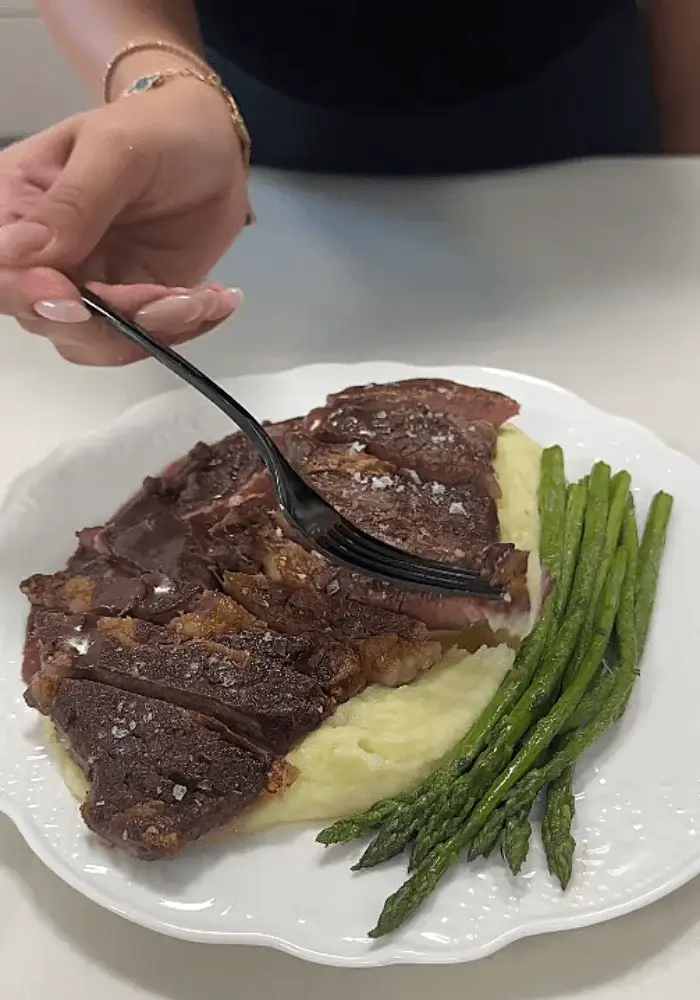
Ribeye Steak with Red Wine Sauce
Watch the Full Step-by-Step
- Medium pot
- Chef's knife
INGREDIENTS
- 1 ribeye steak
- ½ tablespoon beef tallow/ghee
- ½ cup red wine
- 2 garlic cloves
- 1 rosemary sprig
- 1 tablespoon beef tallow
- 1 bunch asparagus, 12–16 spears
Mashed Potatoes:
- 7 medium potatoes
- ¼ cup olive oil
- ¾ cup cream, optional
- Salt to taste

INSTRUCTIONS
- Pat the ribeye dry and season generously with coarse salt. Let sit at room temperature for 1½ hours.
- Peel and cube the potatoes. Boil in salted water until tender, then drain and mash. Add olive oil, coconut cream, and salt, mixing until creamy. Press through a fine sieve for a smooth finish.
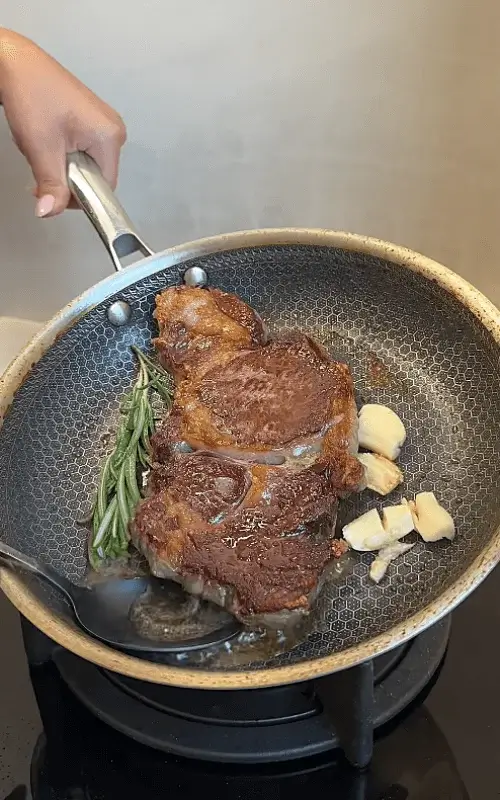
- Heat a stainless-steel skillet over high. Add ½ tablespoon beef tallow, then place the steak in the hot pan. Sear for 2 minutes per side, adding garlic and rosemary after flipping. Baste with the melted fat. Transfer to a plate and rest for 10 minutes.
- In the same skillet, pour in the red wine to deglaze. Add 1 tablespoon beef tallow, salt, and pepper. Reduce until slightly thickened.
- In a clean skillet, sear the asparagus with a little oil until crisp-tender.
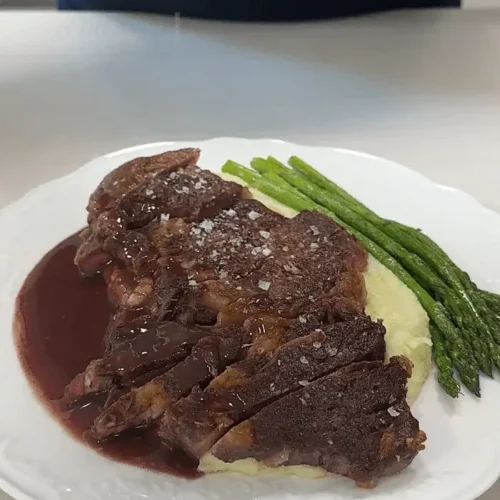
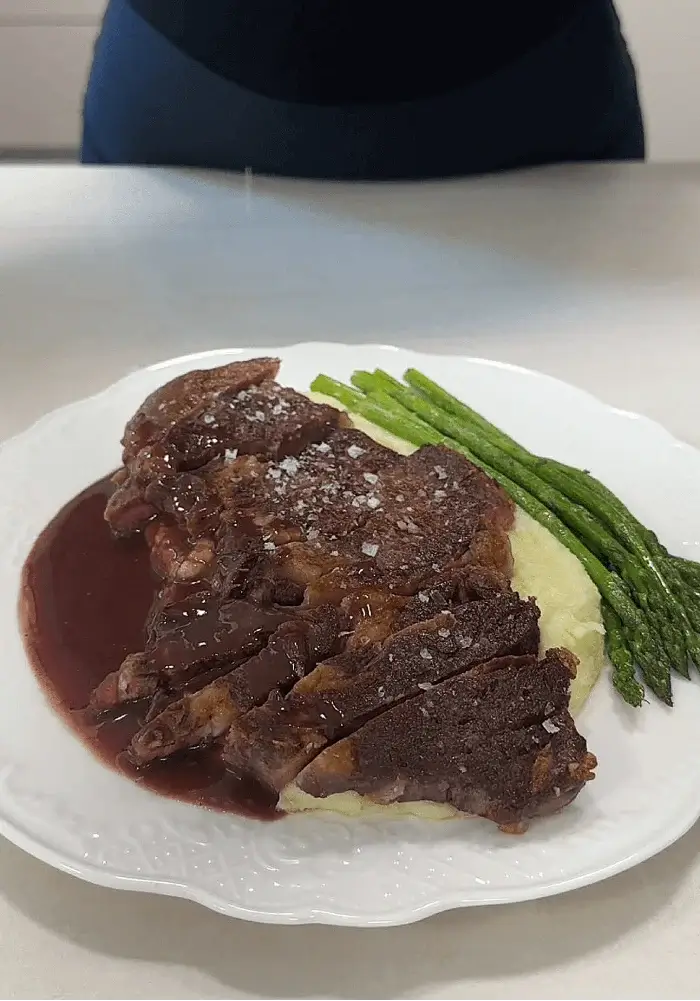
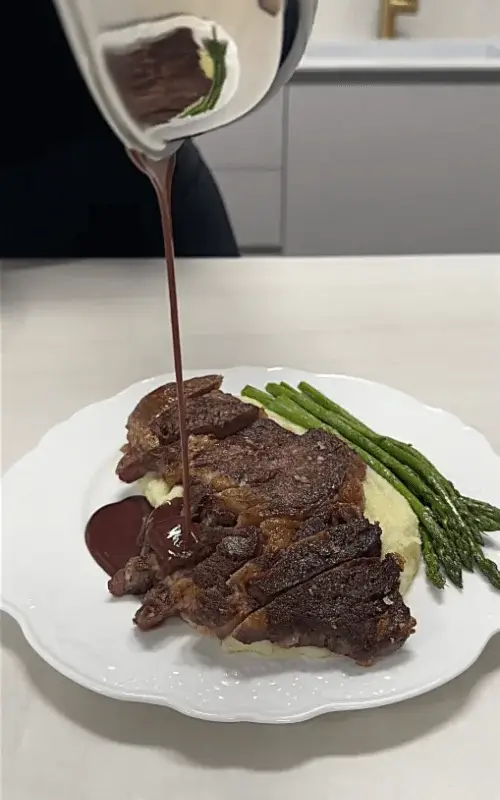
- Spoon mashed potatoes onto plates, add asparagus, slice the steak, and drizzle with the red wine sauce. Finish with coarse salt.
FAQ
What cut of beef is best for making a tender steak with red wine sauce?
For a tender steak with red wine sauce, the ribeye is the ideal cut due to its abundant marbling, which melts during cooking and keeps the steak juicy and flavorful. Ribeye has intramuscular fat that bastes the meat internally while searing, preventing dryness. Striploin or New York strip can also be used, offering a leaner alternative with firm texture, though they will have slightly less fat flavor. When choosing a cut, ensure it is at least 1 to 1½ inches thick, so it can develop a proper crust without overcooking the center.
Look for uniform thickness and avoid cuts with large sinew or excessive connective tissue. Grass-fed beef may cook faster than grain-fed due to lower fat content, so adjust sear times accordingly. Bringing the meat to room temperature for 45–90 minutes before cooking ensures even doneness, and trimming any excess fat allows for better pan contact and prevents flare-ups or uneven browning.
What is the best way to slice the steak?
Rest the steak first, as cutting too early causes juices to escape. Then identify the direction of the fibers and cut perpendicular in even slices. Use a sharp chef’s knife to maintain clean edges and even portions, slicing against the grain to shorten muscle fibers and maximize tenderness. Consistent thickness ensures uniform bites and proper presentation.
What is the best way to sear asparagu?
Heat a skillet over medium-high heat with a small amount of neutral oil or olive oil. Arrange asparagus in a single layer to prevent steaming and turn frequently for uniform char marks. Sear until crisp-tender; this typically takes 3–5 minutes depending on thickness. Season with salt after cooking, as salting before can draw out moisture and reduce caramelization. For more flavor, add aromatics such as garlic cloves or a small sprig of rosemary to the pan while searing. Asparagus should remain slightly firm with a bright green color
How do I properly rest the steak to maintain juiciness?
After searing, transfer the meat to a plate or cutting board and loosely cover with foil for 10 minutes. Resting allows the muscle fibers to relax and reabsorb the juices that would otherwise be lost when slicing. Avoid covering tightly, as trapped steam can soften the crust. Timing is important: use the resting period to finish the red wine sauce or sear the asparagus so all components are ready together.
For thicker steaks, increase resting time to 12–15 minutes to allow heat to redistribute evenly. Use a thermometer to ensure internal doneness before resting, as residual heat will slightly increase the temperature. Resting also enhances flavor, as the steak’s internal juices redistribute evenly, preventing dry or uneven slices when plated.
What type of wine works best for this steak with red wine sauce recipe?
Select a dry red wine with good acidity and body. Cabernet Sauvignon offers robust tannins that complement the richness of a ribeye, while Merlot provides softer fruit notes for a more balanced sauce. Pinot Noir is lighter but adds complexity and earthy undertones suitable for milder cuts. Avoid sweet or overly fruity wines, as they can make the sauce taste cloying. Using a wine you enjoy drinking is recommended, because the flavor concentrates as it reduces. Moderate acidity helps deglaze the pan and lift fond, incorporating browned bits into the sauce for depth. Reducing the wine slowly over low to medium heat ensures a smooth, rich consistency without bitterness.
Can I make the sauce ahead of time?
Yes, it is even better to make in advance for this steak with red wine sauce recipe. Simmer the wine with beef tallow, salt, and pepper according to the recipe, then cool and store in an airtight container in the refrigerator for up to 48 hours. Reheat gently over low heat while stirring to maintain smooth texture and avoid separation. Do not boil aggressively, as this can cause the sauce to thicken too much or develop a burnt flavor. Reheating while the steak rests allows the sauce to finish reduction to the perfect consistency for plating. Adding aromatics like garlic, shallots, or rosemary during reheating can refresh the flavor.
What different fats can I use for steak with red wine sauce?
High-smoke-point fats can replace beef tallow for steak with red wine sauce. Clarified butter or ghee provides richness without burning, while avocado oil or grapeseed oil offers a neutral flavor suitable for high-heat searing. Avoid regular butter at high heat, as it burns quickly and can create bitterness. Using an appropriate fat ensures even browning, helps develop a crust, and provides a medium for basting the steak with pan juices and aromatics. Fats also carry flavor into the meat while cooking, enhancing the overall texture and richness of steak with red wine sauce.