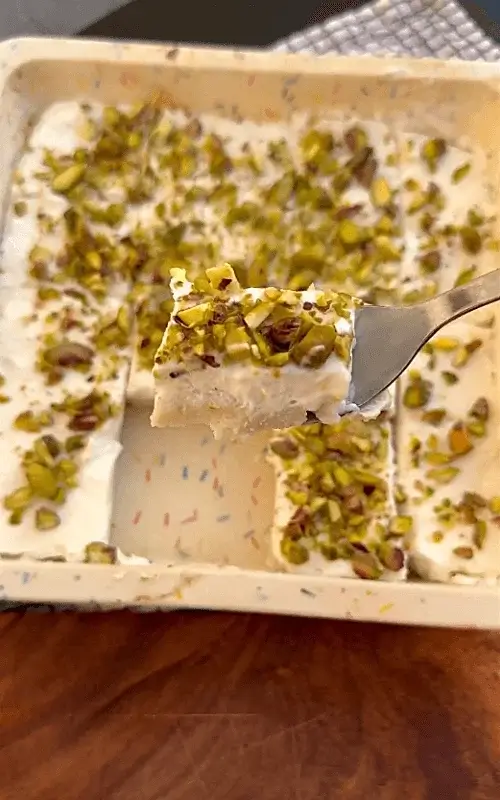
Lebanese Nights Dessert (Layali Lubnan)
Watch the Full Step-by-Step
- Medium saucepan
- Small saucepan
- 8-inch/20 cm square baking dish
- Mixing bowls
- Hand mixer
- Kitchen scale
INGREDIENTS
Base:
- 1½ cups/350 milliliters milk
- 1 ounce/25 grams unsalted butter
- Pinch of salt
- 1 tablespoon granulated sugar
- ½ cup/100 grams semolina
- 1 teaspoon vanilla extract
- 10 drops orange blossom water or rose water
Cream Layer:
- 1 cup/200 milliliters light cream
- 1 heaping tablespoon instant vanilla pudding mix
Lemon Syrup and Finish:
- 3½ tablespoons granulated sugar
- ⅓ cup/100 milliliters water
- 1 teaspoon grated lemon zest
- 1 tablespoon fresh lemon juice
- 10 drops orange blossom water or rose water
- 3 tablespoons pistachios, finely chopped

INSTRUCTIONS
- Heat the milk, butter, sugar, vanilla, and salt in a medium saucepan over medium heat until just boiling. Gradually whisk in the semolina and cook, stirring constantly, until slightly thickened but still pourable, about 2 minutes. Remove from heat and stir in the orange blossom water. Quickly pour into an 8-inch/20 cm square baking dish greased with butter-flavored oil spray. Smooth the surface and refrigerate for 1 hour to set. Work quickly while the semolina is hot, as it thickens fast.
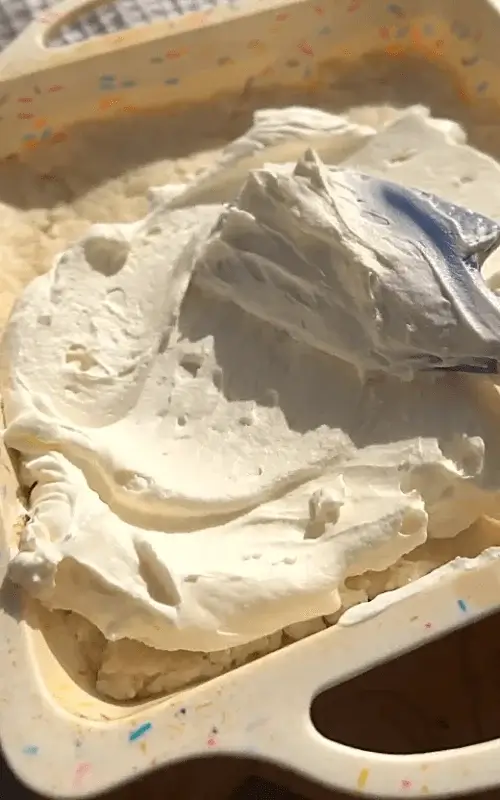
- Whip the cream and pudding mix together in a chilled bowl until stiff peaks form. Spread evenly over the chilled semolina layer, smoothing the top. Refrigerate for at least 3 hours to set completely.
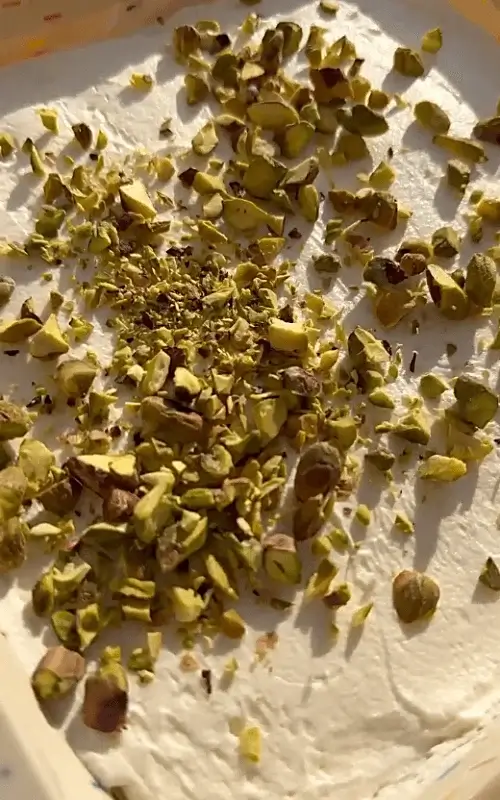
- Combine sugar, water, lemon zest, and lemon juice in a small saucepan. Bring to a gentle boil and simmer for 6–8 minutes, stirring occasionally, until slightly thickened. Remove from heat, stir in the orange blossom water, and let cool. Cut the dessert into squares, sprinkle with pistachios, and spoon about 1 teaspoon of syrup over each piece. Serve immediately.
FAQ
What is Lebanese nights dessert made of?
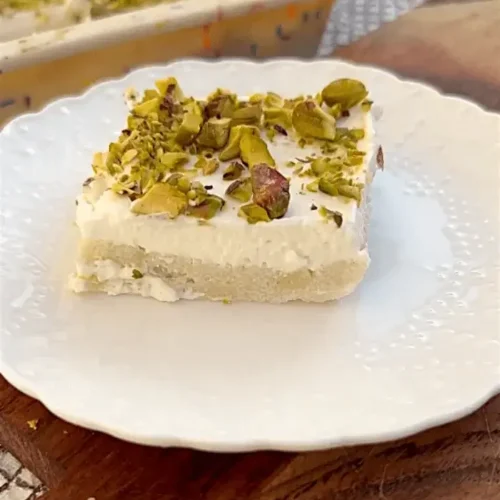
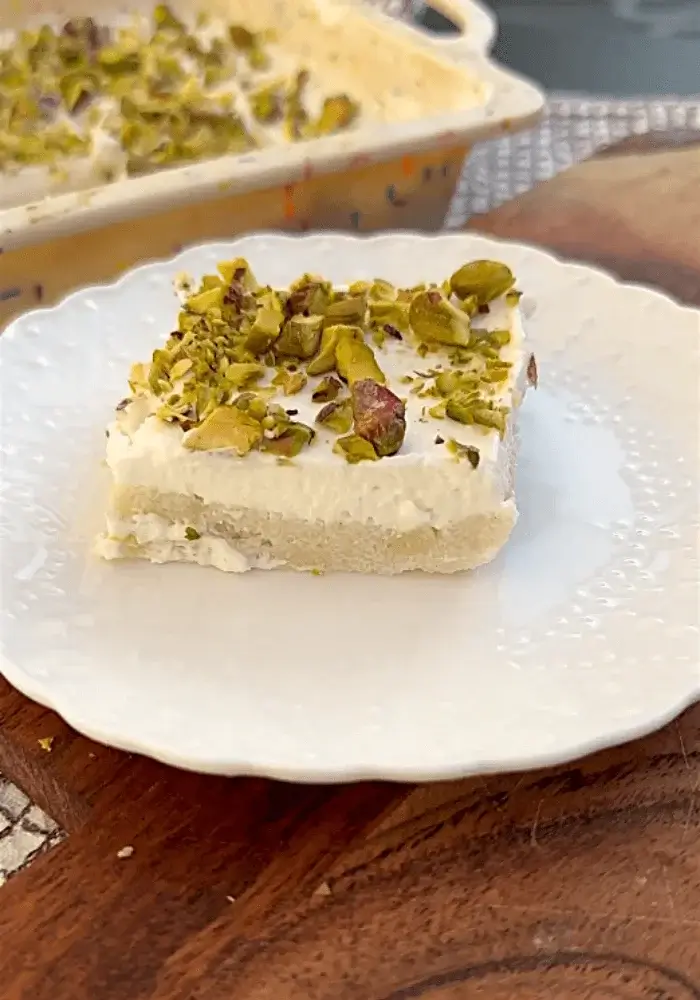
Lebanese nights dessert, also known as Layali Lubnan, is a traditional Middle Eastern sweet made from semolina, milk, sugar, and fragrant flavorings such as orange blossom water or rose water. The base is a lightly cooked semolina pudding that’s poured into a dish and chilled until firm. Once set, it’s topped with a rich, whipped cream layer made with light cream and instant vanilla pudding mix to create a velvety contrast. The dessert is finished with crushed pistachios and a drizzle of lemon-scented syrup, giving it a combination of creamy, floral, and citrusy notes that define its delicate flavor.
How long can the dessert be stored?
This dessert can be stored in the refrigerator for up to 3 days. To maintain its creamy texture and fresh flavor, it should be covered tightly with plastic wrap or stored in an airtight container to prevent the cream layer from absorbing other odors. The syrup can be kept separately in a small jar and drizzled just before serving to preserve the dessert’s light consistency. Freezing is not recommended because the semolina layer and whipped cream topping may separate once thawed. When properly chilled, Lebanese nights dessert keeps its structure and aromatic taste beautifully for several days.
Why is my Lebanese nights dessert not setting properly?
If it doesn’t set correctly, it’s usually due to incorrect semolina-to-liquid ratio or insufficient cooking time. The semolina mixture must be cooked until it thickens enough to coat a spoon but remains pourable. Using too much milk or not allowing the semolina to thicken fully can prevent the base from firming in the fridge. Another common issue is using low-fat milk, which may result in a looser texture. Always chill the dessert for at least 4 hours to ensure proper setting.
Can I make this recipe without rose or orange blossom water?
You can replace the floral water with 1 teaspoon of pure vanilla extract or a few drops of almond extract for a warm, fragrant note. Some cooks even add a bit of lemon zest or orange zest to the syrup to introduce a fresh citrus balance. These substitutions preserve the dessert’s creamy texture and enhance the sweetness without being overly floral.
Is this Lebanese nights dessert gluten-free?
Traditional Lebanese nights dessert is not naturally gluten-free because it’s made with semolina, which is derived from wheat. However, you can create a gluten-free version by substituting the semolina with fine cornmeal, rice flour, or a gluten-free cream of wheat alternative. These options mimic the pudding-like texture while keeping the dish light and creamy. When making this substitution, it’s important to monitor the cooking time closely since gluten-free grains absorb liquid differently. The rest of the components, including milk, sugar, cream, and syrup, are naturally gluten-free.
Can I serve the dessert warm?
Lebanese nights dessert is traditionally served chilled, allowing the semolina base to firm and the cream topping to hold its shape. However, it can also be enjoyed slightly warm if served soon after cooking, though the texture will be softer and more custard-like. When warm, the floral syrup seeps into the pudding, intensifying the sweetness. If you prefer to serve it warm, skip the whipped cream topping and instead drizzle the syrup directly over the pudding layer.
Can I use coconut milk or plant-based milk in Lebanese nights dessert?
Lebanese nights dessert can easily be adapted for a dairy-free diet by replacing the milk with full-fat coconut milk, almond milk, or oat milk. Coconut milk gives the dessert a subtle tropical flavor that blends well with rose or orange blossom water, while almond and oat milk create a milder result. If using non-dairy milk, slightly reduce the liquid or add a tablespoon of cornstarch to help the semolina base set properly. The cream topping can be replaced with whipped coconut cream for a smooth, dairy-free alternative.