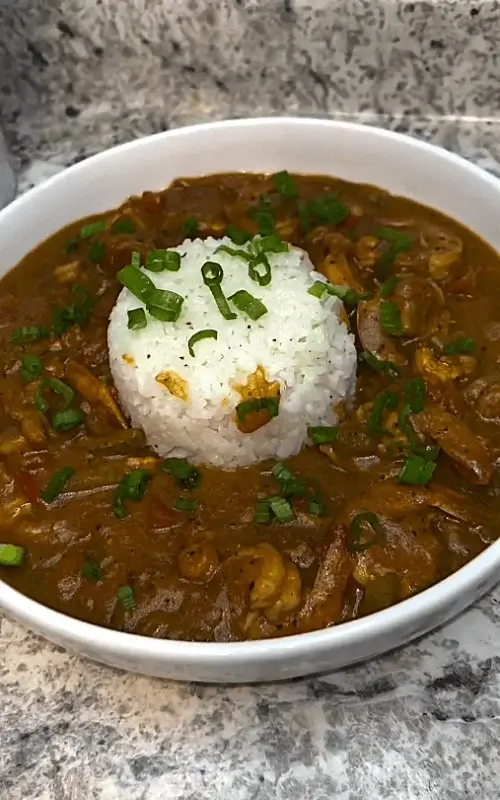
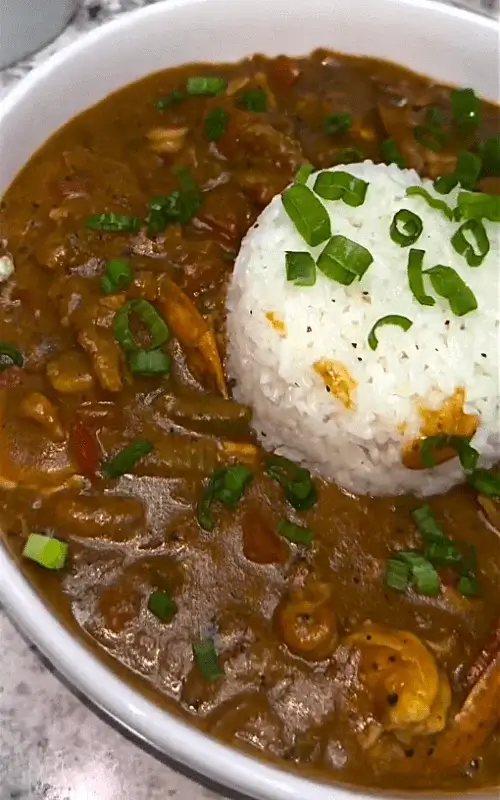
Spicy Louisiana Shrimp and Crawfish Etouffee
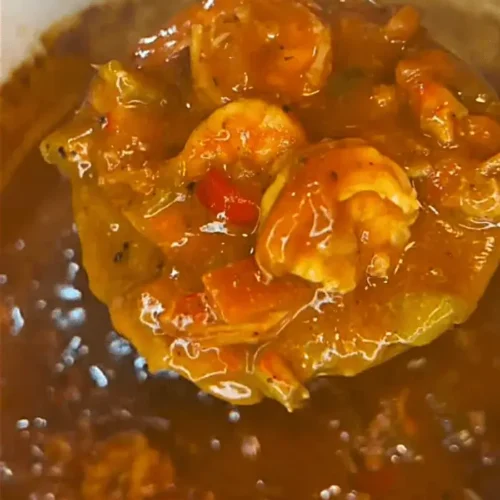
Watch the Full Step-by-Step
- Kitchen scale
- Medium saucepan with lid
INGREDIENTS
- ½ cup scallion greens, chopped
- 1.5 pounds/680 grams large shrimp, peeled and deveined
- 1 pound/450 grams cooked crawfish tails
- 1 teaspoon cayenne pepper
- 1 teaspoon garlic powder
- 1 teaspoon onion powder
- 1 tablespoon Louisiana-style hot sauce
- 1 teaspoon Old Bay seasoning
- Salt and ground black pepper, to taste
Roux:
- ½ cup oil
- ¾ cup all-purpose flour
- “Holy Trinity”:
- 2 cups yellow onion, finely diced
- 1 cup green bell pepper, finely diced
- 1 cup celery, finely diced
- 2 tablespoons tomato paste
- 2 cups seafood stock, or chicken stock
- 1 14 ounce/400 gram can diced tomatoes

FAQ
What is the best way to thicken shrimp and crawfish etouffee?
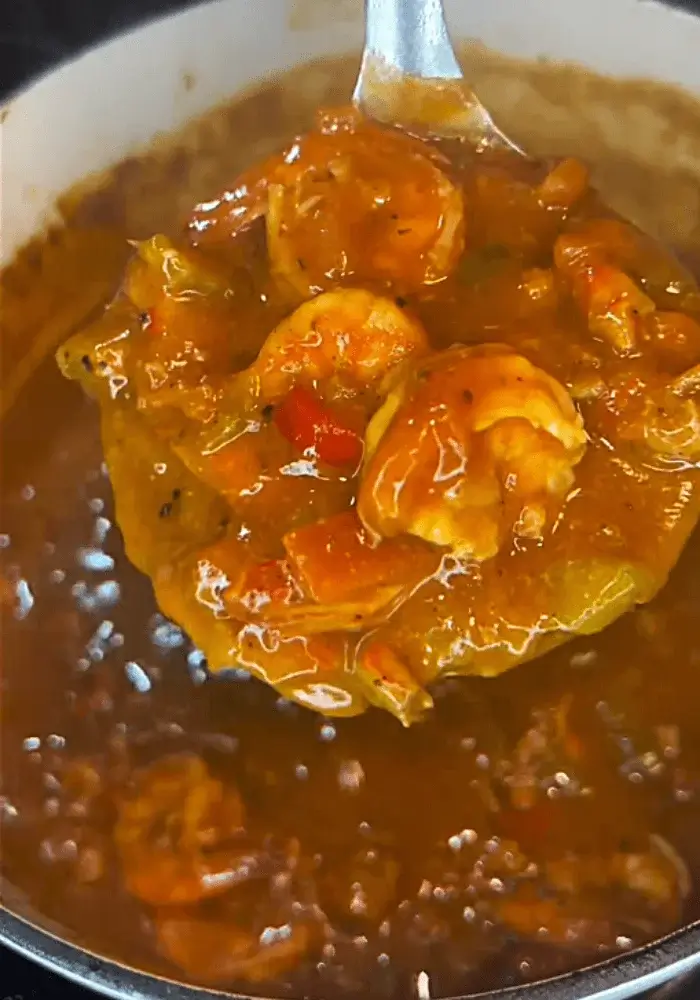
The best way to thicken shrimp and crawfish etouffee is by using a proper roux, which is made from equal parts fat and flour cooked together until it reaches a deep brown color. The roux not only thickens the sauce but also adds a rich, nutty flavor characteristic of Cajun and Creole cooking. Once the roux is ready, you add the “Holy Trinity” of vegetables—onion, celery, and bell pepper—followed by the seafood stock. The sauce will naturally thicken as it simmers. If the consistency is still too thin, let it cook uncovered for several minutes, stirring often, until it reaches a silky, gravy-like texture.
Can I use frozen seafood for this recipe?
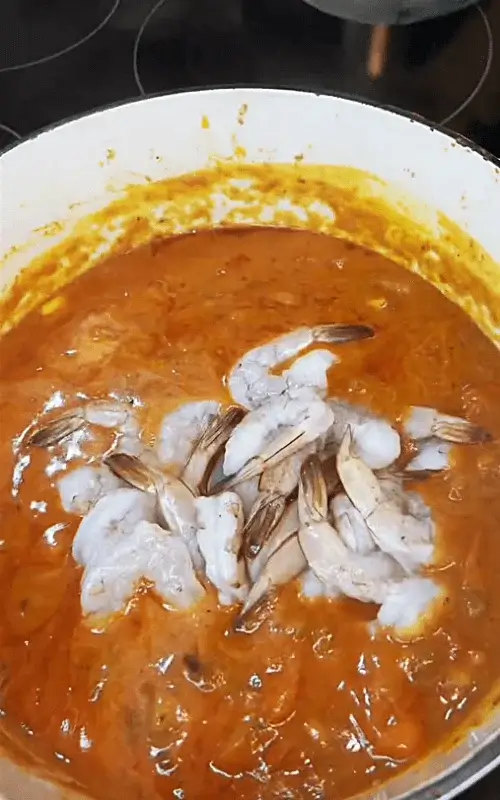
Frozen seafood works well for shrimp and crawfish etouffee as long as it’s properly thawed and drained. Many home cooks use frozen peeled and deveined shrimp and precooked crawfish tails, which are often sold frozen. To thaw, place the seafood in the refrigerator overnight or under cold running water for quicker results. Pat dry before adding to the sauce to prevent excess liquid from thinning the etouffee. Using frozen seafood doesn’t compromise flavor if your base—the roux, stock, and seasonings—is flavorful and balanced. Just be careful not to overcook the shrimp and crawfish, as they can become rubbery quickly.
What should I serve with shrimp and crawfish etouffee?
Shrimp and crawfish etouffee is traditionally served over steamed white rice, which absorbs the flavorful sauce perfectly. Long-grain rice such as jasmine or basmati works well, though some prefer parboiled rice for a firmer texture. To complete the meal, you can serve it alongside crusty French bread for dipping, or pair it with a crisp green salad or coleslaw to balance the richness of the dish. Some people enjoy adding hot sauce on the side for extra heat. In Louisiana, a cold beer or sweet tea often accompanies shrimp and crawfish etouffee for a true Southern experience.
Can I make shrimp and crawfish etouffee ahead of time?
Yes, and it actually allows the flavors to deepen. Prepare the sauce base up to the point before adding the seafood, then cool and refrigerate it for up to two days. When ready to serve, gently reheat the sauce and add the shrimp and crawfish just before serving to prevent them from overcooking. This approach ensures that the seafood remains tender and the roux-based sauce retains its rich consistency. Shrimp and crawfish etouffee also freezes well for up to two months. Thaw overnight in the refrigerator and reheat over low heat, stirring occasionally until warmed through.
What is the difference between shrimp and crawfish etouffee and gumbo?
The main difference lies in texture and consistency. Etouffee is thicker and more gravy-like, typically served over rice, while gumbo is a thinner stew served with rice mixed in. Etouffee relies on a darker roux and a smaller selection of vegetables—mainly the “Holy Trinity”—to create its rich, smooth sauce. Gumbo, on the other hand, often includes okra, sausage, and a wider range of seafood or meats. Both dishes share roots in Louisiana Creole and Cajun cooking, but shrimp and crawfish etouffee emphasizes the sweetness of shellfish in a buttery, spiced sauce rather than a soupy broth.
Can I use other seafood in this recipe?
Crabmeat, scallops, or chunks of firm white fish such as snapper or grouper work well in place of shrimp and crawfish. The key is to use seafood that can hold up to simmering without falling apart. When making these substitutions, follow the same cooking method, adding the seafood toward the end so it stays tender. While this variation may slightly alter the flavor, the roux-based sauce and Cajun seasonings will ensure it remains true to the spirit of shrimp and crawfish etouffee.
How can I make the shrimp and crawfish etouffee less spicy?
Reduce or omit cayenne pepper and hot sauce from the recipe. Old Bay seasoning, while flavorful, also contains some spice, so you can cut its quantity slightly. The goal is to maintain depth without overwhelming heat. If the dish still tastes too spicy after cooking, stir in a small amount of heavy cream or unsalted butter to mellow the flavors. Serving the etouffee over plain rice also helps balance the spice level.