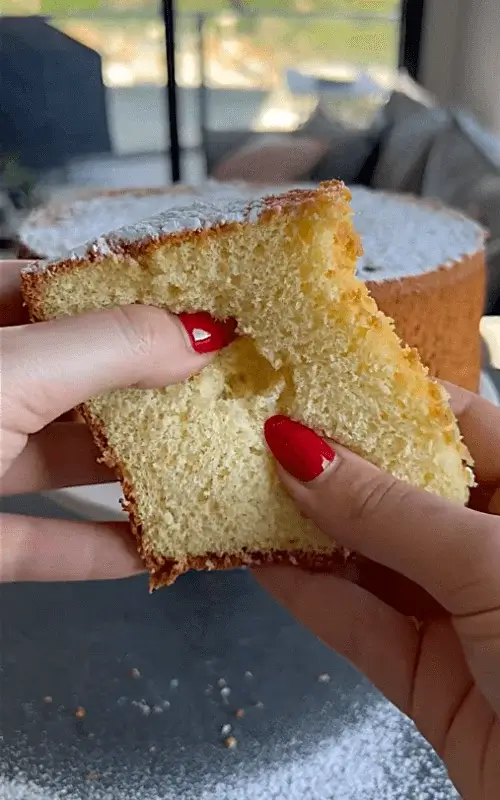
Light and Fluffy Orange Sponge Cake (Dairy Free)
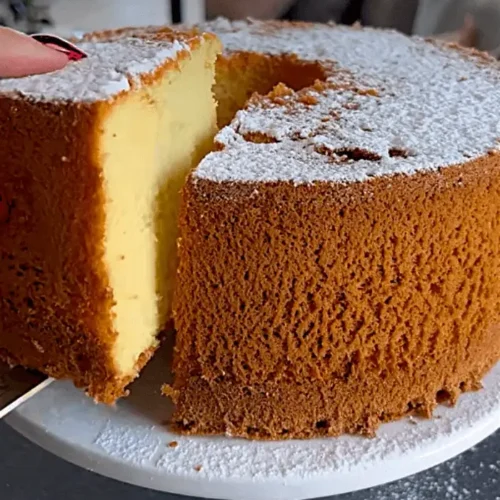
Watch the Full Step-by-Step
- 26 cm/10-inch tube pan
- Mixing bowls
- Balloon whisk
- Kitchen scale
INGREDIENTS
- 6 large eggs, separated
- 1½ cups/300 grams sugar
- 1¾ cups/225 grams all-purpose flour
- 1½ teaspoons/6 grams baking powder
- ¾ cup/180 milliliters fresh orange juice
- ½ cup/120 milliliters oil
- Powdered sugar, for dusting

INSTRUCTIONS
- Preheat the oven to 160°C/320°F, static mode (top and bottom heat).
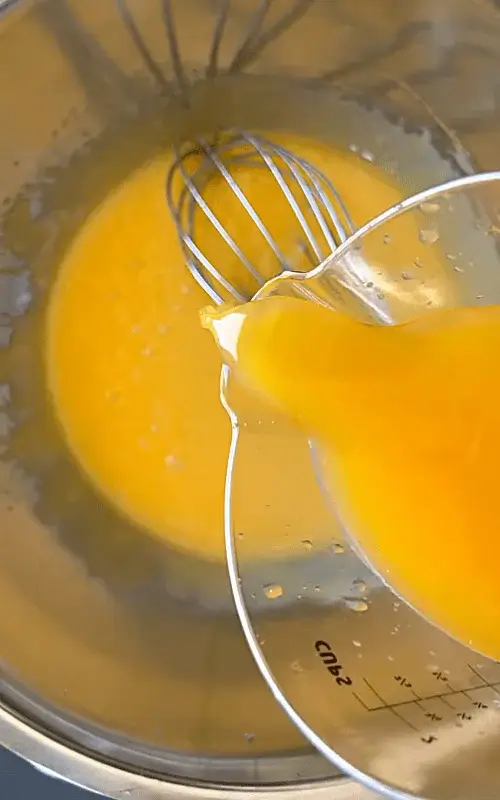
- In a large bowl, whisk the yolks with oil until combined. Add ½ cup/100 grams sugar and whisk until smooth.
- Add half the flour and half the orange juice alternately, whisking well. Stir in the remaining flour, baking powder, and orange juice until smooth and lump-free.
- In a clean mixing bowl, whip the egg whites at medium speed until soft foam forms. Gradually add the remaining 1 cup/ 200 grams sugar and whip on high until glossy and stable peaks form.
- Gently fold one-third of the egg whites into the yolk mixture. Fold in another third until fully incorporated. Fold in the final third carefully, ensuring a smooth, lump-free batter.
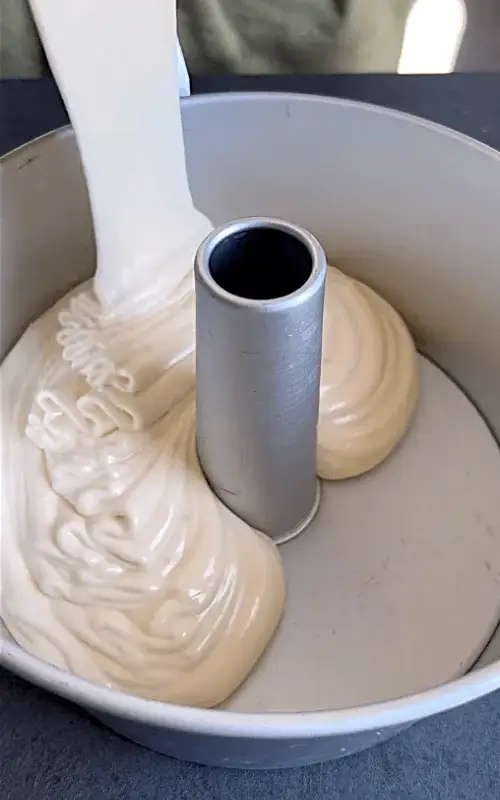
- Pour the batter into an un-greased 26 cm/10-inch Dutch oven or tube pan, filling about ¾ full. Smooth the top and bake for 1 hour 10 minutes. Do not open the oven before one hour.
- When golden and springy to the touch, remove from the oven. If using a Dutch oven pan, invert immediately onto the small legs. Allow to cool for 3 hours or overnight.
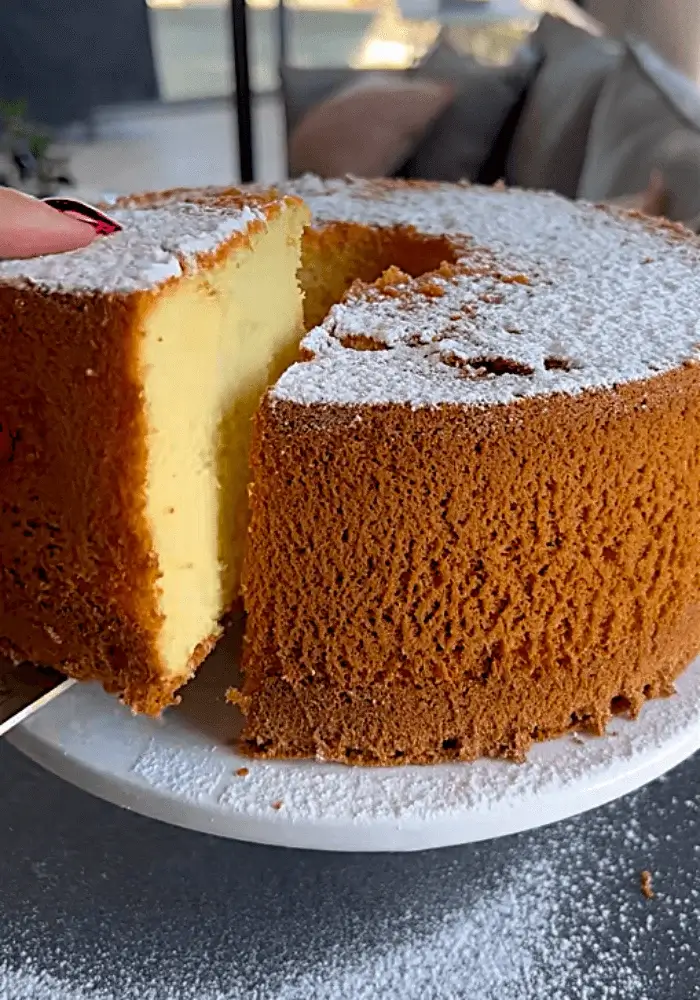
- Once completely cooled, release the cake carefully using a small plate. Transfer to a serving plate and dust with powdered sugar.
FAQ
Why is my orange sponge cake not rising properly?
Sponge cakes depend on whipped egg whites for structure and volume rather than chemical leaveners alone. If the egg whites are under-beaten, over-beaten, or folded too roughly, the air bubbles collapse, and the cake cannot rise evenly. Another common cause is opening the oven door too early, which drops the temperature and deflates the batter before it has set. Make sure to bake at a steady 320°F/160°C and avoid greasing the pan, allowing the batter to cling to the sides and rise fully. Always use room-temperature eggs, clean mixing bowls (no traces of fat), and a gentle folding motion to preserve the air that gives the orange sponge cake its light and fluffy height.
How can I make my orange sponge cake extra moist?
Balance the liquid-to-flour ratio and avoid overbaking. The combination of oil and orange juice in this recipe already helps retain moisture, but accuracy in mixing is key. Measure flour correctly by spooning and leveling to prevent a dry texture. If you prefer an even softer crumb, you can replace a small portion of the orange juice with freshly squeezed mandarin juice or add a teaspoon of honey for subtle richness. After baking, brush the warm cake with a thin orange syrup made from orange juice and sugar for added moisture. Cooling the cake upside down in its pan also prevents it from sinking and keeps it airy while locking in internal moisture.
Why should I cool the cake upside down?
Cooling the orange sponge cake upside down is essential to preserve its airy, cloud-like structure. Because this type of cake relies on whipped eggs rather than heavy fats, it remains delicate until completely cooled. Inverting the pan prevents gravity from collapsing the crumb before it has set. If the cake cools upright, the tender structure can shrink or deflate, resulting in a dense texture.
Tube pans or Dutch oven pans often have small legs for this purpose, allowing air to circulate while the cake hangs freely. This step may seem unusual but is crucial for achieving the tall, spongy, and feather-light consistency that defines a perfect orange sponge cake. Once fully cooled—ideally for at least 3 hours—it can be released cleanly without tearing or compressing.
Can I make the cake in a regular pan?
A tube pan helps the cake bake evenly by allowing heat to reach the center, preventing undercooked middles. If using a regular pan, choose one that’s at least 9 inches (23 cm) wide and deep enough to hold the expanding batter. Line the bottom with parchment paper but avoid greasing the sides to let the batter cling as it rises. Reduce the oven temperature slightly to 310°F/155°C if your pan is dark or smaller to prevent over-browning. Keep an eye on the baking time, as it may finish a few minutes earlier.
How can I make this orange sponge cake gluten-free?
Replace the all-purpose flour with a 1:1 gluten-free flour blend that includes rice flour, potato starch, and xanthan gum for structure. Avoid using a single flour type like almond or oat flour alone, as those tend to make the cake dense and heavy. When mixing, fold the batter very gently, since gluten-free blends are more fragile. Bake slightly longer if needed, testing with a skewer to ensure doneness.
What can I serve with orange sponge cake?
You can pair slices with whipped coconut cream, mascarpone, or vanilla yogurt. Fresh berries, such as raspberries or strawberries, add a refreshing contrast to the cake’s sweetness. For a Mediterranean-style dessert, serve it with a spoonful of date syrup or honey and a sprinkle of toasted pistachios. The cake’s fluffy structure also makes it ideal for layering with pastry cream or fruit compote for a more elaborate presentation.
How should I store the cake?
In an airtight container at room temperature for up to two days. Since this cake is oil-based and contains orange juice, it stays moist naturally without refrigeration. However, if your kitchen is warm or humid, store it in the refrigerator to prevent spoilage. Wrap the cake tightly in plastic wrap or place slices in an airtight container to prevent drying. Before serving chilled cake, allow it to return to room temperature for the best texture. You can also freeze orange sponge cake for up to three months. Wrap it securely in plastic, then foil, to prevent freezer burn. When ready to serve, thaw at room temperature