Protein-Rich Greek Yogurt Pizza Dough

Watch the Full Step-by-Step
- Baking sheet
- Rolling Pin
- Kitchen scale
INGREDIENTS
Dough:
- 1 cup + 1 tablespoon/128 grams all-purpose flour
- 7 ounces/200 grams plain Greek yogurt
- 1 tablespoon/15 grams olive oil
- 1 teaspoon/4 grams baking powder
- 1/2 teaspoon/3 grams salt
Toppings:
- 1 cup crushed tomatoes
- 1/2 cup canned corn
- 2 cups mozzarella cheese
- 1 teaspoon pizza seasoning

INSTRUCTIONS
- Preheat the oven to 375°F/190°C.
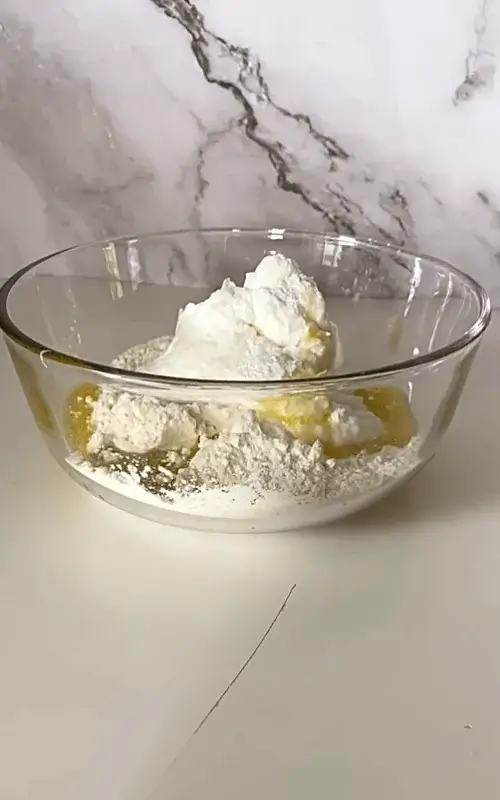
- In a mixing bowl, combine the flour, yogurt, olive oil, baking powder, and salt until a soft, slightly sticky dough forms; no kneading required. Let the dough rest for 5 minutes while you prepare toppings and line a baking sheet with parchment.
- On a lightly floured surface, roll the dough to your desired thickness and trim to a neat circle with a pizza cutter for a tidy edge. Spread crushed tomatoes evenly, scatter the corn, and sprinkle pizza seasoning.
- Bake for 10 minutes, remove, top with mozzarella, and return to the oven for 5 minutes more, or until the cheese is melted and golden.

FAQ
What makes this dough different from traditional pizza dough?
Greek yogurt pizza dough differs from traditional yeast-based pizza dough in both texture and preparation. It doesn’t require yeast or rising time, making it faster and simpler to prepare. The Greek yogurt adds moisture, tanginess, and extra protein, giving the dough a tender, slightly chewy texture similar to flatbread. It also bakes faster and produces a thinner, crispier crust compared to classic pizza doughs. Because it relies on baking powder instead of yeast, Greek yogurt pizza dough can be made on the spot without waiting for fermentation or proofing.
Can I make this Greek yogurt pizza dough ahead of time?
Yes, but it should be stored properly to maintain its texture. After mixing the dough, wrap it tightly in plastic wrap and refrigerate for up to 24 hours. Before rolling, let it come to room temperature for 15 to 20 minutes to relax the gluten and make it easier to handle. You can also freeze the dough for up to one month. To use frozen Greek yogurt pizza dough, thaw it in the refrigerator overnight, then allow it to rest at room temperature before shaping and baking.
Why is my Greek yogurt pizza dough sticky or too dry?
A sticky or dry dough usually indicates an imbalance between the flour and yogurt. If your Greek yogurt pizza dough is sticky, sprinkle in small amounts of flour until it’s soft and easy to handle but not stiff. If it’s too dry or crumbly, add a teaspoon of yogurt or a few drops of olive oil to restore moisture. Humidity, flour brand, and yogurt thickness can all affect texture, so adjustments are normal. The final dough should feel pliable, smooth, and slightly tacky—enough to roll easily without sticking to your hands.
Can I cook the pizza in a skillet instead of an oven?
Preheat a nonstick or cast-iron skillet over medium heat and lightly brush it with olive oil. Roll the dough to fit the skillet, place it inside, and cook for 3 to 4 minutes until the bottom begins to brown. Flip, spread the tomato sauce and toppings, cover with a lid, and cook for another 5 to 6 minutes until the cheese melts and the crust is golden. This method creates a texture similar to stovetop flatbread, making Greek yogurt pizza dough a versatile option for quick meals.

Can I use whole wheat flour or other flours?
You can replace all-purpose flour with whole wheat, spelt, or oat flour to make Greek yogurt pizza dough more nutritious. Whole wheat flour adds fiber and a nutty flavor, but it can make the dough denser. To balance that, mix half whole wheat flour with half all-purpose flour for a lighter texture. Oat or spelt flour can also work but may need extra yogurt or olive oil for proper hydration. Because these flours absorb liquid differently, add the yogurt gradually until a soft, workable dough forms that isn’t sticky.
How do I prevent the crust from becoming soggy?
Always pre-bake or parbake Greek yogurt pizza dough before adding wet toppings like tomato sauce or fresh vegetables. Bake the rolled dough at 375°F/190°C for about 7 minutes, just until firm and lightly golden, then remove it, add sauce and toppings, and finish baking. Also, avoid overloading with moisture-rich ingredients such as mushrooms or fresh mozzarella without patting them dry first. A light layer of olive oil brushed on the dough before baking can create a barrier that helps maintain a crisp crust, even with juicy toppings.
Can I make the Greek yogurt pizza dough without baking powder?
You can make Greek yogurt pizza dough with a simple substitute. Combine 1/4 teaspoon baking soda with 1/2 teaspoon lemon juice or vinegar to replicate the leavening power of baking powder. Mix the soda directly into the dry ingredients and add the acid to the yogurt before combining everything. The reaction will create small bubbles that give the dough its light, airy texture. Without a leavening agent, the dough will still bake, but it will be denser and more like a flatbread than traditional pizza crust.