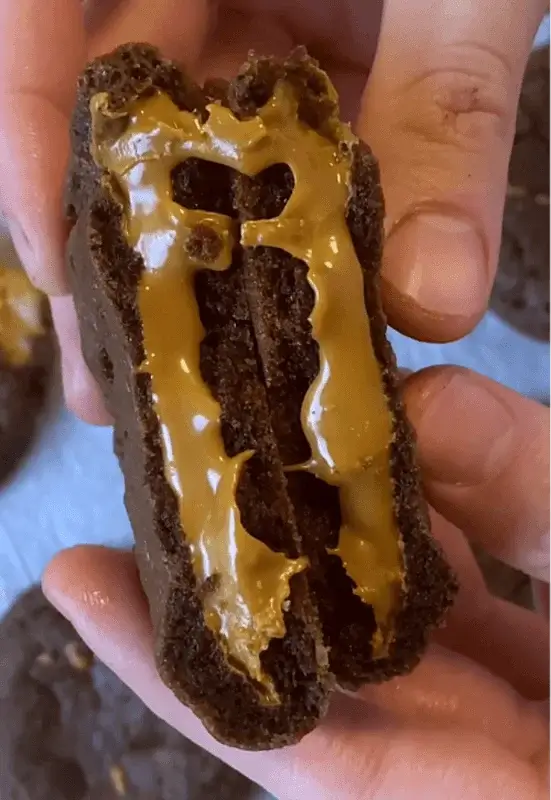
Chocolate Biscoff Cookies

Watch the Full Step-by-Step
- Mixing bowls
- Baking sheets
- Kitchen scale
- Wire rack
INGREDIENTS
- 8 tablespoons/120 grams Lotus Biscoff spread, frozen at least 1 hour
Dough:
- 1/2 cup/100 grams white sugar
- 1/2 cup/100 grams brown sugar
- 8.8 ounces/250 grams unsalted butter, softened
- 2 large eggs/100 grams
- 3 1/3 cups/400 grams all-purpose flour
- 1 1/6 cups/100 grams unsweetened cocoa powder
- 1 1/4 teaspoons/6 grams baking soda
- 1/2 teaspoon/3 grams salt

INSTRUCTIONS
- Preheat the oven to 350°F/180°C and line two baking sheets with parchment.
- Freeze the Biscoff spread on a parchment-lined tray for at least 1 hour, until firm.
- Beat the butter and both sugars until smooth and creamy. Add the eggs and mix until incorporated.
- Stir in the flour, cocoa powder, baking soda, and salt just until a soft dough forms. Cover and refrigerate the dough for 30 minutes to firm.
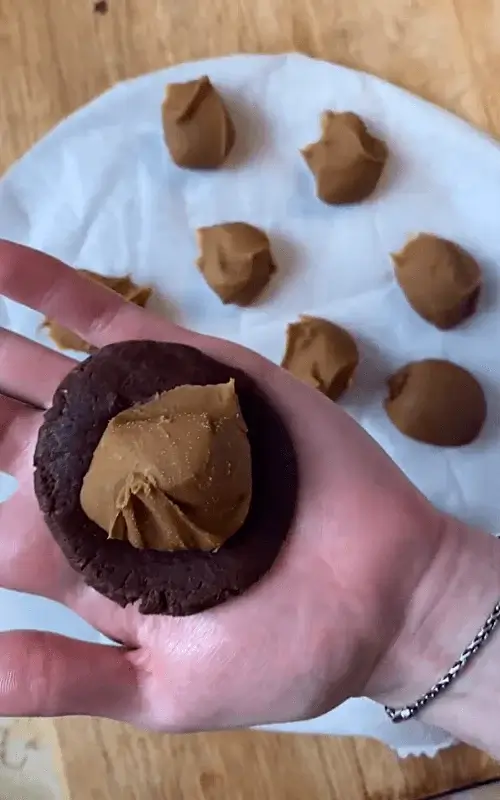
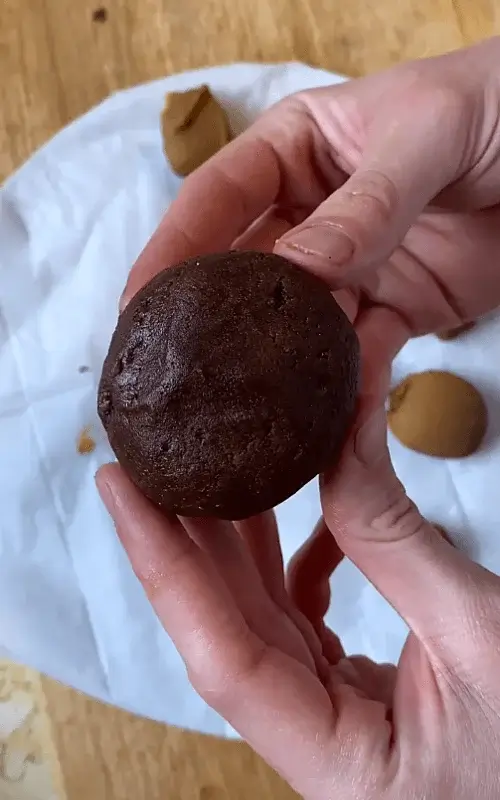
- Divide the dough into 16 equal pieces. Flatten one piece in your palm, place a frozen Biscoff portion in the center, and cover with a second piece of dough; seal the edges and shape into a smooth ball.
- Arrange the cookies on the prepared sheets, leaving space for spreading. Bake for 10 minutes, until edges are set and centers are still soft.
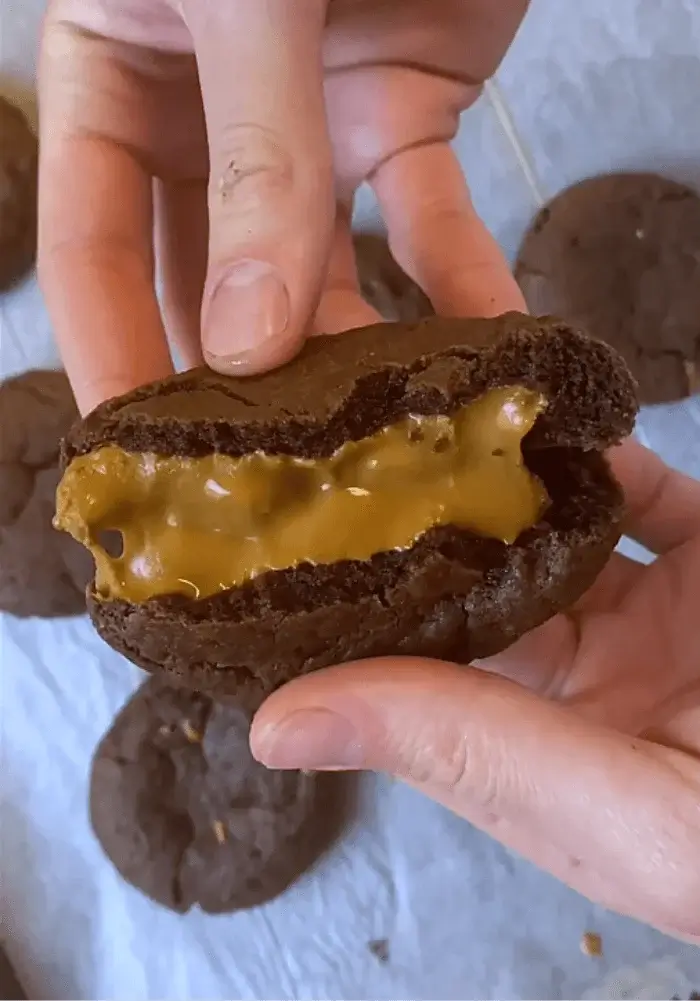
- Cool on the baking sheet for 10 minutes, then transfer to a wire rack. Serve slightly warm for a molten center.
FAQ
How do I keep the Biscoff filling from melting completely?
The key to maintaining a molten yet intact center in chocolate Biscoff cookies is freezing the Biscoff spread before baking. It should be frozen for at least one hour, preferably longer, so it stays firm while the cookie dough sets in the oven. Using cold dough also helps slow the melting process, ensuring the spread remains creamy instead of fully liquefying. Avoid overbaking, since excess heat will cause the filling to blend into the dough rather than stay distinct inside the cookie.
Can I use crunchy Biscoff spread instead of smooth in chocolate biscoff cookies?
The small biscuit bits in the crunchy version create a firmer, more textured center rather than a fully molten one. If you prefer a gooey filling, smooth spread works better. However, using crunchy spread can add a nice contrast between the soft, chewy chocolate dough and the crisp pieces inside. Both options work well—it depends on whether you prefer a silky or crunchy interior.
Why do I need to chill the dough before baking?
Chilling the dough before baking chocolate Biscoff cookies is essential for structure and flavor. Cold dough spreads less in the oven, helping the cookies hold their shape and keep the Biscoff filling enclosed. It also allows the flour to fully hydrate and the butter to firm up, leading to a richer, deeper taste and better texture. Skipping this step can cause the cookies to flatten too quickly, exposing the filling and losing the signature thick, chewy consistency that defines chocolate Biscoff cookies.
How should I store chocolate Biscoff cookies to keep them fresh?
Store them in an airtight container at room temperature for up to three days. The texture will remain soft and chewy if protected from air exposure. For longer storage, refrigerate them for up to a week or freeze for up to two months. To enjoy them warm again, microwave for 10 to 15 seconds to soften the Biscoff filling.
Can I make chocolate Biscoff cookies ahead of time?
You can freeze the shaped, unbaked cookie dough balls with the frozen Biscoff center for up to two months. When ready to bake, simply place them on a parchment-lined tray and bake straight from frozen, adding about two extra minutes to the baking time. This method helps retain the chewy texture and gooey filling. You can also refrigerate the dough for up to two days before baking, which enhances flavor and convenience.
Why do my cookies turn out dry or crumbly?
Dry or crumbly chocolate Biscoff cookies usually result from overbaking or using too much flour. These cookies should be baked only until the edges are set and the centers look slightly underdone, as they continue to cook on the baking sheet. Always measure flour accurately using a scale to avoid adding excess. Softened butter, not melted, ensures the right texture. Also, don’t skip the chilling step—this keeps the cookies thick and chewy rather than dry or cakey after baking.
Can I add chocolate chips or nuts to chocolate biscoff cookies?
Semi-sweet or dark chocolate chips enhance the richness of the cocoa dough, while toasted hazelnuts, pecans, or almonds add a pleasant crunch. Mix up to 1 cup/170 grams of add-ins into the dough after combining the dry ingredients. However, avoid overloading the dough, as too many additions can interfere with the structure and sealing around the Biscoff filling.