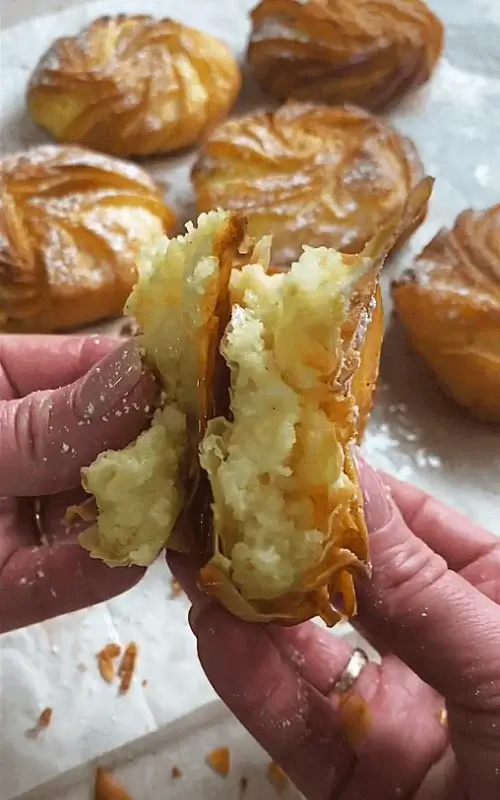
Mascarpone Orange Pastry
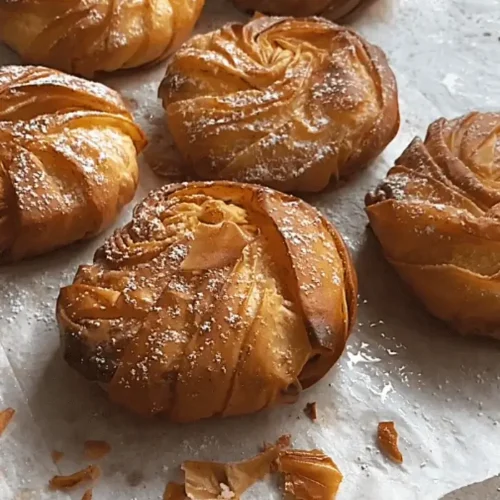
Watch the Full Step-by-Step
- Mixing bowls
- Pastry brush
- Baking sheet
- Kitchen scale
INGREDIENTS
- Powdered sugar
Filling:
- 1 cup/200 grams water
- 1 cup/200 grams whole milk
- 3/4 cup/150 grams sugar
- Zest of 1 medium orange
- 3/4 cup/150 grams semolina
- 9 ounces/250 grams mascarpone
- 1 large egg
- 1 tablespoon vanilla paste or extract
Dough:
- 1 pound/450 grams phyllo dough sheets, thawed according to package directions
- 3.5 ounces/100 grams unsalted butter, melted

INSTRUCTIONS
- Bring the water, milk, sugar, and orange zest to a near boil in a medium saucepan. Gradually whisk in the semolina. Cook, whisking, until thickened, 1 to 2 minutes. Remove from heat and let cool for 10 minutes. Stir in mascarpone, egg, and vanilla until smooth.
- Heat the oven to 355°F/180°C with convection, and line a baking sheet with parchment paper.
- Lay out one phyllo sheet and brush lightly with melted butter. Pinch the center and twist gently. Place 1 heaping tablespoon of filling in the center. Fold the sides over the filling, then flip the pastry upside down to set its shape. Repeat with remaining phyllo and filling.
- Arrange the pastries on the prepared sheet. Brush tops with butter and bake until deep golden, about 45 minutes.
- Dust with powdered sugar before serving.
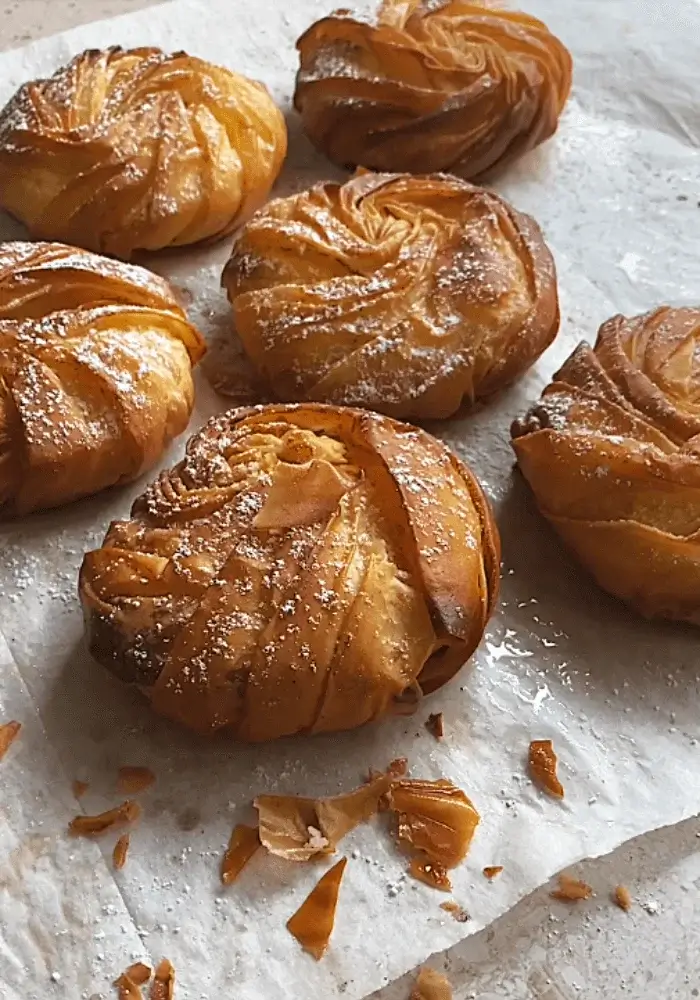
FAQ
How do I prevent the phyllo from drying out while making orange pastry?
Keep the stack of dough covered with a slightly damp kitchen towel or plastic wrap while working. Phyllo dries out very quickly when exposed to air, becoming brittle and difficult to handle. Always brush each sheet with melted butter as soon as you lay it down, which not only adds flavor but also prevents cracking. Working efficiently and covering unused sheets ensures smooth, flexible dough for wrapping the filling.

Can I prepare this orange pastry ahead of time?
You can assemble the pastries and refrigerate them, unbaked, for up to 24 hours before baking. In this case, cover them tightly to prevent the phyllo from drying out. Alternatively, you can bake the pastries fully, let them cool, and store them in an airtight container at room temperature for up to two days. If needed, re-crisp them in a warm oven before serving. Freezing unbaked pastries is also an option, though phyllo texture may be slightly affected.
What substitutions can I use for mascarpone?
Ricotta cheese, well-drained to remove excess liquid, is another option, though it will give the filling a lighter texture. Greek yogurt mixed with a bit of cream can also work for a tangier version. Each substitute slightly changes the flavor, but all provide a smooth texture that complements the semolina and orange zest filling.
How should I store leftover orange pastry?
Once cooled, place the pastries in an airtight container at room temperature for up to two days. To keep them for longer, refrigerate for up to four days, though the phyllo will lose some crispness. Reheat in a preheated oven at 355°F/180°C for 10 to 15 minutes to restore flakiness before serving. Freezing baked pastries is possible, but thawing may soften the layers, so reheating in the oven is recommended to regain crispness.
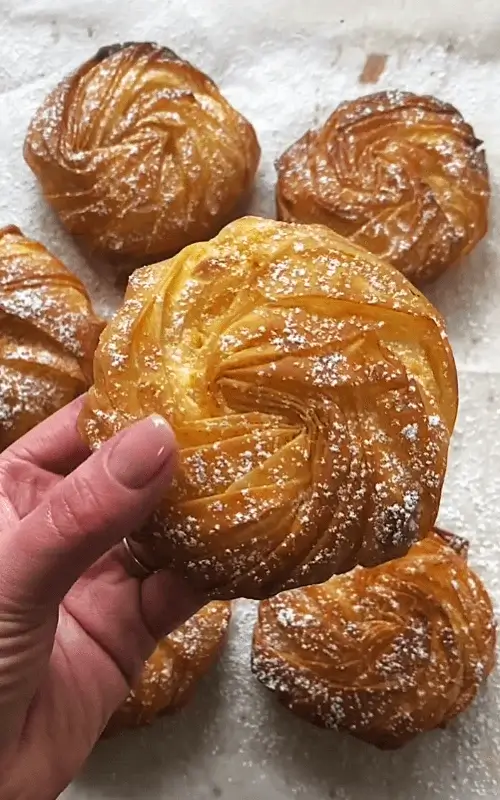
How do I keep this orange pastry crisp after baking?
Allow the pastries to cool completely on a wire rack instead of leaving them on the baking sheet, which can trap steam and soften the layers. Store them uncovered at room temperature for the first day to maintain flakiness. If you need to store longer, transfer them to an airtight container but re-crisp in the oven at 355°F/180°C for 8 to 10 minutes before serving. Avoid refrigeration unless necessary, as moisture softens the phyllo layers.
Can I use store-bought puff pastry instead of phyllo?
Phyllo creates thin, crisp layers, while puff pastry bakes into thicker, buttery, and more bread-like layers. If using puff pastry, roll it slightly thinner than packaged and cut into squares or circles before filling and folding. Baking time may be shorter, usually 25 to 30 minutes, since puff pastry browns more quickly than phyllo. This swap gives a richer, denser pastry.
What type of semolina is best for the filling?
The best semolina for orange pastry filling is fine semolina, which cooks quickly and creates a smooth, creamy custard-like texture. Coarse semolina will give the filling a grainier consistency that may not blend as evenly with mascarpone and egg. When whisked gradually into the hot milk mixture, fine semolina thickens within minutes and absorbs flavor from the sugar and orange zest.