Crispy Pickled Red Cabbage

Crispy Pickled Red Cabbage How long does pickled red cabbage last in the fridge? Pickled red cabbage can last for up to three weeks in the refrigerator when stored properly. The key to maintaining freshness is ensuring that the cabbage remains fully submerged in the brine to prevent exposure to air, which can promote mold or spoilage. Use a clean spoon each time you remove cabbage from the jar to avoid contamination. Over time, the flavor of pickled red cabbage will deepen and intensify, often improving after the first 24 hours. If the brine becomes cloudy, has an off odor, … Read more

Tags:

Salads / Sides

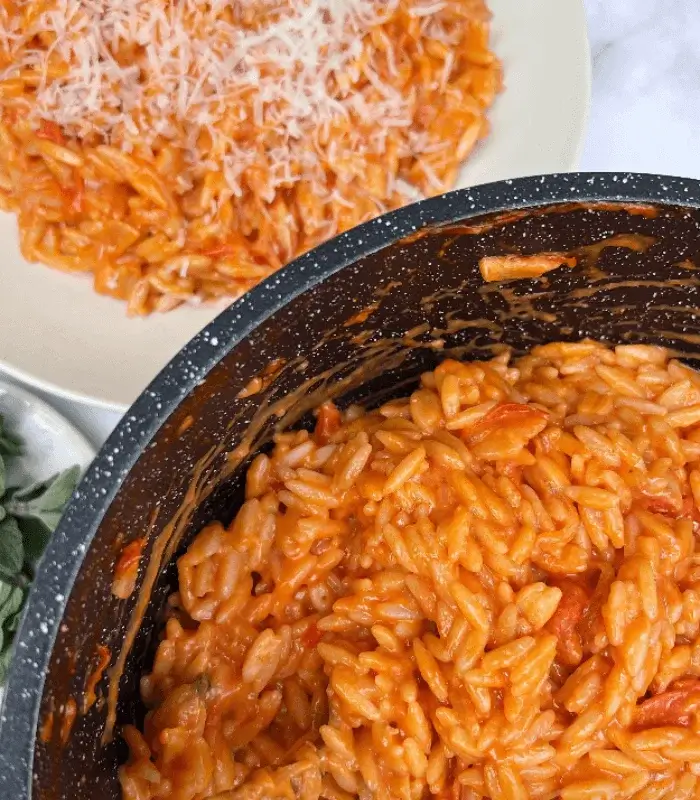
Creamy Tomato Orzo

Creamy Tomato Orzo Can I make this creamy tomato orzo ahead of time? Yes, but it’s best enjoyed fresh due to the starch content and creamy texture. If preparing in advance, cook the dish and let it cool completely before storing it in an airtight container in the refrigerator for up to three days. When reheating, add a splash of water, milk, or broth to loosen the sauce, as it thickens significantly when chilled. Warm it gently on the stovetop over low heat, stirring frequently to prevent sticking. Reheating too aggressively can cause the orzo to break down and lose … Read more

Tags:

Main Courses / Sides

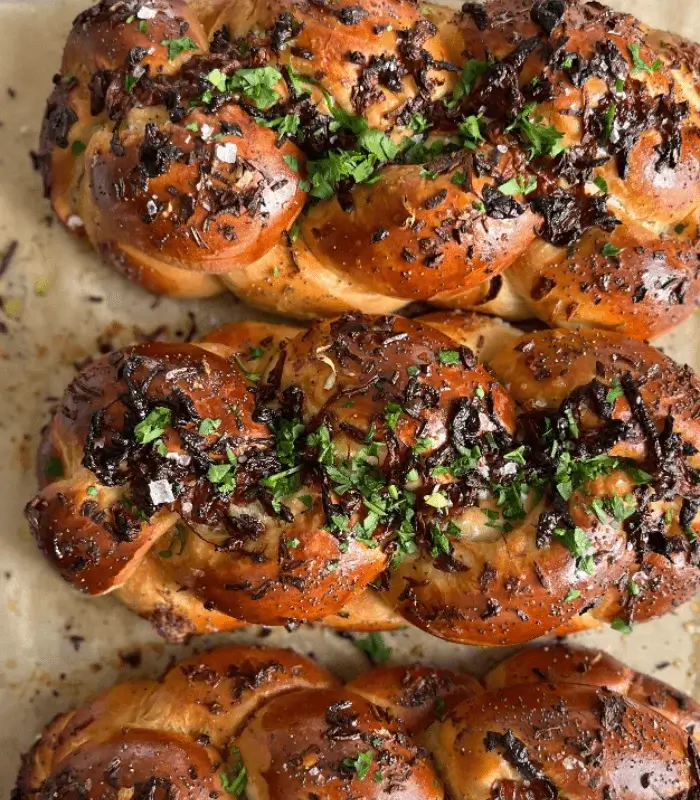
Four Braided Challah with Caramelized Onions and Herb Topping

Four Braided Challah with Caramelized Onions and Herb Topping Best flour for this four braided challah The best flour to use is high-protein all-purpose flour or bread flour. These flours typically contain around 11–13% protein, which helps develop a strong gluten network essential for achieving a soft yet structured crumb. The gluten allows the dough to rise well and retain air, resulting in a fluffy interior. If the flour has too little protein, the challah may collapse or have a dense texture. Stick with unbleached flour, as bleached versions may produce inconsistent results. You can also combine bread flour and … Read more

Tags:

Bread / Sides

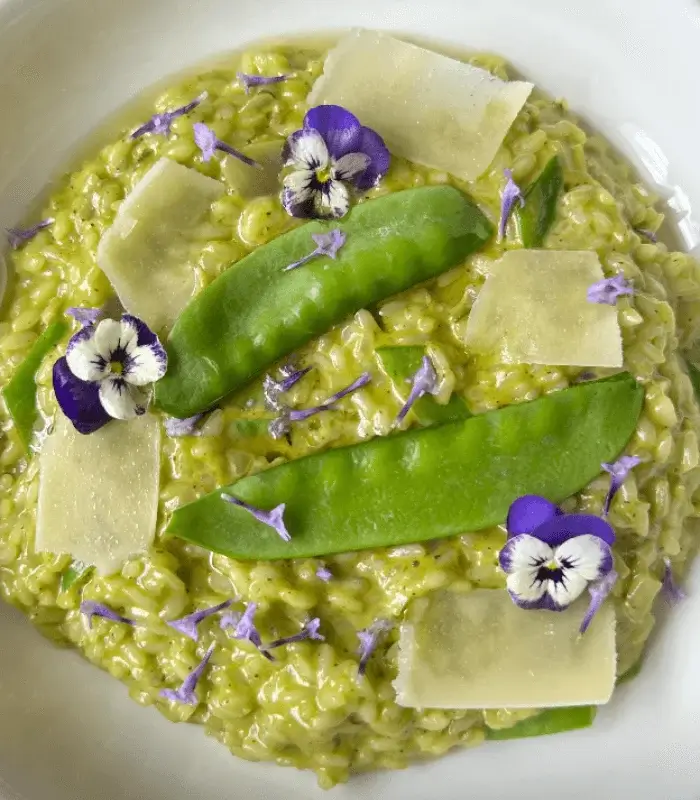
Kale and Leek Risotto

Kale and Leek Risotto What is the best type of rice to use for risotto? The best type of rice to use for risotto is Arborio rice, which is a short-grain Italian variety known for its high starch content. This starch is essential for creating the creamy texture that defines a proper risotto. Other acceptable varieties include Carnaroli and Vialone Nano, both of which also have a high starch content and retain their shape well during cooking. Long-grain rice varieties, such as jasmine or basmati, do not release enough starch and will result in a dish that lacks the signature … Read more

Tags:

Sides

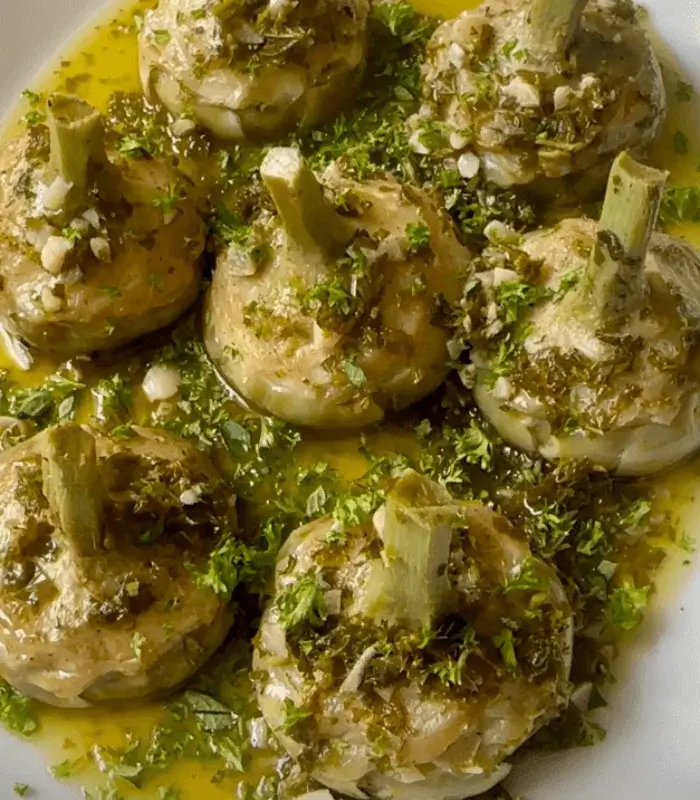
Carciofi alla Romana

Carciofi alla Romana What is the best type of artichoke to use? The best type of artichoke to use for Carciofi alla Romana is the Romanesco artichoke, also known as “mammole” in Italy. This variety is traditionally grown in the Lazio region and is prized for its round, thornless structure and tender inner leaves, making it ideal for stuffing and braising. Romanesco artichokes have a delicate flavor and a more tender texture compared to globe artichokes, which makes them particularly suited to this preparation. If Romanesco artichokes are unavailable, choose the freshest, firm, medium-sized globe artichokes with tightly closed leaves … Read more

Tags:

Appetizers / Sides

Caesar Salad Focaccia

Caesar Salad Focaccia Best type of lettuce for this Caesar salad focaccia The best type of lettuce for Caesar salad focaccia is crisp, sturdy romaine. Romaine holds up well against the dressing and maintains its crunch when placed over warm focaccia. Its slightly bitter edge complements the creamy, tangy Caesar dressing. Avoid using softer lettuces like butterhead or spring mix, as they wilt quickly and can make the dish feel soggy. If pre-washed lettuce is used, ensure it is completely dry before dressing it. Some variations of Caesar salad focaccia also incorporate baby kale or endive for a more complex … Read more

Tags:

Appetizers / Bread / Salads / Sides

The Fluffiest Gluten Free Rolls

The Fluffiest Gluten Free Rolls What makes these gluten free rolls soft and fluffy? Gluten free rolls require a careful balance of ingredients to achieve a soft and fluffy texture. Because gluten is responsible for elasticity in traditional dough, using a blend of gluten-free flours is essential. Starches like tapioca or potato starch help lighten the texture, while xanthan gum or psyllium husk can mimic gluten’s structure. Proper hydration is also crucial, as gluten-free flours absorb more liquid than wheat flour. A long kneading time ensures all ingredients are well combined, and allowing the dough to rise fully before baking … Read more

Tags:

Bread / Holidays / Sides

Gluten Free Quiche with Leeks, Mushrooms and Spinach

Gluten Free Quiche with Leeks, Mushrooms and Spinach Can I make this gluten free quiche ahead of time? Yes! After baking, let the quiche cool completely before covering it tightly with plastic wrap or aluminum foil. Store it in the refrigerator for up to four days. If you need to prepare it further in advance, you can freeze it for up to three months. To freeze, wrap the entire quiche or individual slices in plastic wrap and then aluminum foil to prevent freezer burn. When ready to eat, reheat in a 350°F (175°C) oven until warmed through, about 15-20 minutes. … Read more

Tags:

Appetizers / Main Courses / Sides

Caramelized Pumpkin with Balsamic Glaze and Goat Cheese

Caramelized Pumpkin with Balsamic Glaze and Goat Cheese How can I make sure my caramelized pumpkin doesn’t get soggy? To prevent your caramelized pumpkin from becoming soggy, it’s important to ensure that you’re using a dry pan when searing the pumpkin, and avoid overcrowding the pan. The pumpkin should be seared on all sides in hot oil to create a golden, caramelized exterior before roasting. Additionally, ensure that the pumpkin cube is not cut too small, as smaller pieces may break down too much during roasting and release more moisture. When transferring the pumpkin to the oven, make sure the … Read more

Tags:

Appetizers / Sides

Home Cooks World